
Finding the best breast pump for large breasts is less about maximum suction and more about how the cup sits in your bra. The same wearable model can stay sealed on one chest and shift, tilt, or rub on another.
This article covers flange sizing, cup shape, bra support, alignment, and posture so the pump stays put instead of needing constant adjustment.
General information only, not medical advice.

Table of Contents
- Flange size and cup size are different fit problems
- Seal stability depends on cup shape and bra support
- Alignment, comfort settings, and posture prevent friction
- Choosing the best breast pump for large breasts
- Conclusion
Flange size and cup size are different fit problems
A common mistake when shopping for a breast pump for bigger breasts is assuming a larger bra cup automatically needs a larger flange tunnel. Cup size describes breast volume. Flange size depends on nipple diameter and how the nipple moves during pumping.
Those are related to comfort, but they are not the same measurement.
A tunnel that is too large pulls in extra areola; one that is too small presses the nipple against the sides. With larger cup sizes, the harder fit question is usually whether the outer cup sits smoothly over fuller tissue while the tunnel stays centered.
Fuller bust tissue makes that alignment harder to judge, and some parents upsize the flange even when nipple diameter has not changed. Extra tissue can shift the tunnel off-center without sharp pain at first, so seal problems often show up only when output drops or one side feels rubbed raw.
| Fit question | What to check | Why it matters |
| Nipple tunnel | Measure nipple diameter before pumping | Prevents rubbing or excess tissue pull |
| Outer cup shape | Check whether the rim spreads pressure evenly | Reduces sharp edges on fuller tissue |
| Bra support | Hold the pump close without crushing it | Helps keep the seal stable |
| Visibility | Confirm nipple alignment before starting | Prevents off-center friction |
If pain, swelling, or nipple damage keeps happening, the right next step is not cycling through more flange sizes on guesswork. It is worth checking fit with a lactation consultant or another qualified feeding professional.
Seal stability depends on cup shape and bra support
On a large chest, a wearable breast pump sits against moving tissue, not a flat surface. Seal problems usually show up before suction becomes the issue. The cup may tilt when the breast shifts, when the bra fabric presses from the side, or when milk begins collecting in the container.
Once the angle changes, suction can feel weaker even if the motor setting has not changed.
Cup profile changes how the pump moves
Wearable pump fit for large breasts often breaks down in ways that have little to do with flange diameter. Parents who wear D, DD, E, or larger cups carry more tissue below and beside the tunnel.
That curve makes it harder to keep the rim flat against the skin, especially once milk adds weight inside the cup.
The right cup needs enough coverage to spread pressure without so much bulk that the weight of collected milk pulls it out of place. Profile shape also changes how freely you can move during a session.
Wider cups feel more stable but bulkier under clothing; deeper cups hold more milk yet shift when you bend; low-profile cups hide more easily but offer less support for fuller breast tissue; and heavier collection zones sag more when you walk.
If the seal only holds while you sit still, it will struggle during the parts of a day when pumping is supposed to save time.
| Cup design | Movement impact |
| Wider profile | More stable seal, but bulkier under clothing |
| Deep profile | Better capacity, more noticeable when you move |
| Low-profile | Easier to wear discreetly, less support for fuller breast tissue |
| Heavier collection area | More shifting when walking or reaching |
Match the cup outline to how you actually pump. A parent at a desk needs different stability than one who pumps while moving through the house.
When you need to compare wide versus low-profile cups or see which flange sizes each wearable offers, the eufy breast pump lays out those details side by side.
Bra support has to hold the pump and breast together
A supportive bra matters more with larger cup sizes because the pump and breast need to be held as one shape. A loose bra lets the pump sag. A bra that is too tight can press the cup into the tissue and create a pinched lower edge.
Good support keeps the pump close without needing a hand to hold it, holds the collection cup upright, and does not flatten the breast against the tunnel.
If the pump shifts when you raise your arm, bend slightly, or turn to reach a bottle, the bra and cup are not working together yet. If the fit still feels off, start with these setup checks.
- Lift the breast into the cup before closing the bra
- Center the nipple before the fabric pulls the cup sideways
- Check the lower edge after a few minutes, since pressure often builds there
Alignment, comfort settings, and posture prevent friction
Once the cup and bra hold a stable seal, most remaining discomfort comes from setup visibility, suction settings, and body position. Alignment is the first place to check, because an off-center tunnel can rub even when flange size and bra support look right.
Clear alignment prevents off-center rubbing
Visibility is a real fit issue for larger cup sizes. When the collection cup blocks your line of sight, it is easy to start slightly off-center. The session may still run, but the nipple rubs one side of the tunnel, output feels uneven, or the seal breaks when you move.
Clear parts, a visible tunnel, or a light near the alignment area can make setup less frustrating. Before the motor starts, check that the nipple is centered in the tunnel and the cup rim lies smoothly without folded skin underneath. If you cannot confirm either point, pause and reset. A thirty-second correction at the start is easier than stopping mid-session because something feels wrong.
Settings and posture should feel repeatable
More suction does not always mean more comfort or more output.
Fuller tissue can already feel heavy or tender, especially early postpartum, during engorgement, or when a duct feels clogged. A good fit with a breast pump for large breasts should let you use enough suction to move milk without turning the session into a pain test.
Warmth, massage, and rhythm settings can help some parents settle into a session, but they still need to be adjustable. The useful setting is the one your body tolerates repeatedly, not the most intense one available.
For daily pumping, watch for these signs that the fit or settings need adjustment.
- The first minutes feel sharp instead of gently pulling
- One side empties more slowly after a small alignment change
- The seal breaks when intensity rises
- You finish with swelling or lingering tenderness
If comfort changes suddenly, recheck flange size, part assembly, and body position before raising suction again.
Even a well-fitting pump can feel worse if posture pushes the lower rim into the breast. Slouching over a phone, leaning over a desk, or twisting while the cups are filling can change the seal and add pressure to one side. Sit or stand tall enough that the cups stay upright, keep your shoulders relaxed, and let the bra support the pump without forcing the cups upward.
Choosing the best breast pump for large breasts
When comparing options, start with the fit problem you actually have. Some parents need a better flange size. Some need a cup that stays sealed in a supportive bra. Others need easier alignment at night or more control over rhythm.
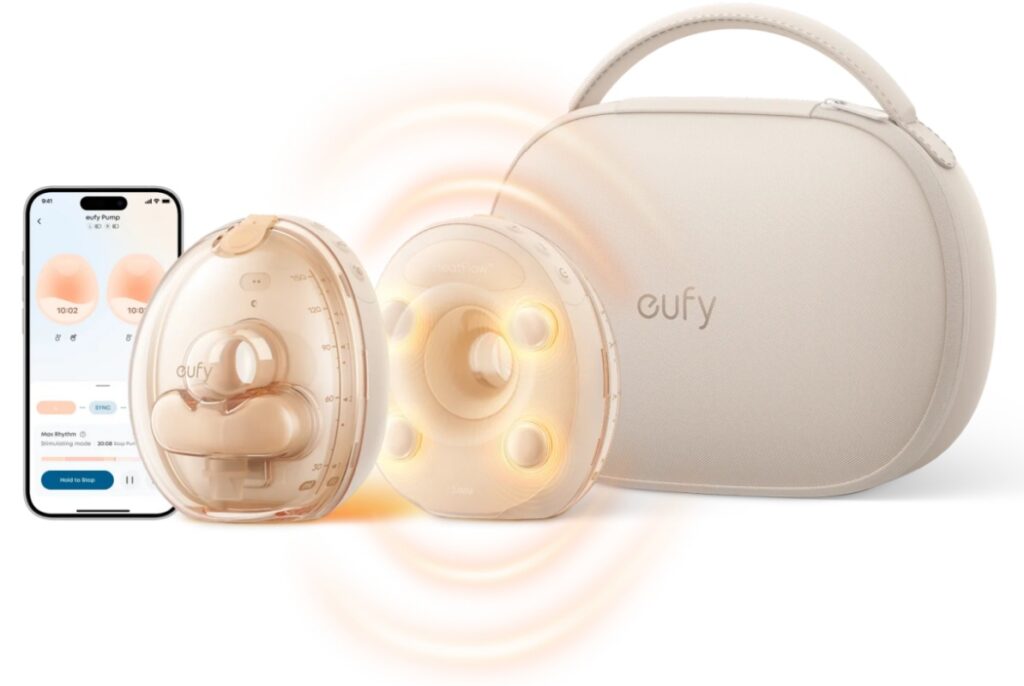
When shifting and alignment cause most of the trouble, start with visibility at setup. The eufy Wearable Breast Pump S2 Pro uses a 360° see-through design and built-in Nipple Light so you can check positioning and flow without turning on the room light or lifting the bra flap.
It comes with expert-crafted sizing inserts so you can match a measured tunnel size without ordering accessories separately.
During daytime wear, a weak seal often breaks when you bend for a bottle or shift in a supportive nursing bra, spilling output onto clothing. A double-sealed liquid silicone flange helps here, and the S2 Pro adds app alerts if a seal loosens when you bend and stops automatically when the collector is full.
On engorged or clogged days when the first minutes sting, HeatFlow™ 2.0 warms the flange in just 15 seconds, and VibraPump™ massage can run through the session instead of jumping straight to higher suction. For large breasts, daily pumping usually fails at tunnel size, bra stability, or alignment you cannot verify, long before suction becomes the limit.
Compare models on how each one handles the problem you run into most often, then look at comfort extras like warmth or rhythm.
Conclusion
Better fit with a breast pump for large breasts starts with separating nipple size from breast volume.
Measure the flange tunnel, then look at cup coverage, D+ fit challenges, cup shape for movement, seal stability, bra support, alignment visibility, and posture.
When those pieces work together, daily pumping feels less like managing hardware and more like a routine your body can repeat comfortably.