
Young children learn throughout the day, often without a formal lesson taking place. A conversation during breakfast builds language skills. Sorting laundry introduces categories, while pouring water into a cup requires coordination and judgment.
An early learning ecosystem at home recognizes these ordinary moments as opportunities for children to practice thinking, communicating, moving, and solving problems.
Parents can support that development without turning the house into a classroom.
Make Learning Materials Easy to Reach
Children are more likely to explore when useful materials are visible and accessible. Books placed on a low shelf invite independent browsing.
Paper, crayons, blocks, puzzles, and simple craft supplies can give children choices without requiring a parent to organize an activity every time.
More materials are not necessarily better. Too many toys can make it difficult for a child to settle into one activity. Rotating a smaller selection periodically can renew interest while keeping play areas manageable.
The setup should also change as children develop. A puzzle that once required adult help may eventually become too easy, signaling that it is time to introduce a greater challenge.
Use Conversation as a Learning Tool
Language development happens through interaction, not simply exposure to words. Parents can build conversation into routines by describing what is happening, asking open-ended questions, and giving children time to respond.
A grocery trip, for example, can become a chance to compare sizes, identify colors, count produce, or talk about where foods come from. During a walk, children can describe weather, plants, animals, traffic sounds, or changes in the neighborhood.
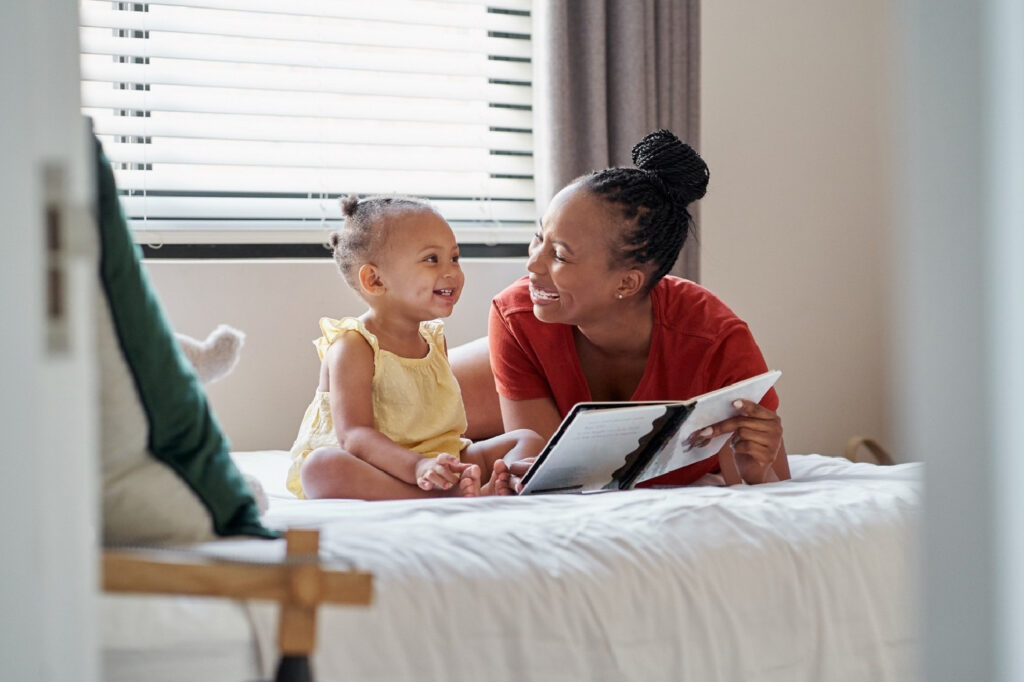
Reading adds another layer. Instead of rushing through a book, occasionally stop to ask what a child thinks might happen next or why a character made a particular choice.
Give Children Real Responsibilities
Household tasks provide practical learning experiences because the outcome matters. A young child can match socks, put napkins on the table, water plants, or help measure ingredients.
These activities combine several skills at once. Cooking may involve counting, sequencing, fine motor control, vocabulary, and basic science. Cleaning up toys requires sorting and following a process.
Tasks should match the child’s developmental level. The purpose is participation and practice, rather than completing the chore perfectly.
Connect Home Learning With Outside Experiences
Home is one part of a child’s broader learning environment. Libraries, parks, museums, playgroups, caregivers, relatives, and preschool programs can introduce different people, settings, materials, and routines.
Parents can strengthen those connections by bringing experiences back into conversation. After visiting a nature center, a child might draw an animal that stood out or look for a related book at the library.
This gives new information another context instead of allowing the experience to end when the family returns home. An effective early learning environment is built from ordinary interactions rather than a packed schedule of educational activities.
Accessible materials, meaningful conversation, real household responsibilities, and experiences beyond the home give children different ways to practice developing skills.
To learn more about early learning, feel free to look over the accompanying infographic below.
