
Key Takeaways
- Waterfront, shared-access, and inland homes can serve very different lifestyles and budgets.
- The purchase price is only one part of the cost of owning a lake-area property.
- Access rights, dock rules, flood exposure, insurance, and utility systems should be reviewed before an offer is made.
- An inland location can provide easier upkeep while keeping parks, marinas, and lake recreation within reach.
- A smart purchase balances recreation, convenience, risk tolerance, and future resale plans.
Buying near Lake Guntersville is about more than finding a beautiful view. The right home must also fit your budget, daily routine, comfort level with maintenance, and plans. Buyers comparing local options can consult Guntersville AL real estate expert Trenten Hammond of South Towne Realtors. His Guntersville-focused website provides home-search tools, valuation resources, buyer and seller information, and community coverage for Guntersville, Albertville, Arab, Boaz, Grant, and surrounding North Alabama areas.


A direct waterfront address can make boating, fishing, and relaxing by the water exceptionally convenient. A lake-access home may provide much of that recreation without owning shoreline. An inland home may offer a broader selection of neighborhoods and a more predictable ownership experience. The best choice depends on how you intend to live in the home, not simply on how close it appears to the lake.
Why the Setting Matters More Than the View
Two homes near the same stretch of Lake Guntersville can have very different values and responsibilities. One may include owned shoreline, a permitted dock, and immediate access to the water. Another may have a lake view but no right to cross neighboring land. A third may be part of a community with a shared dock, boat slip, or access easement.
Start with the routine you want. A household that launches a boat several times a week may place a high value on private access. Someone who prefers a low-maintenance primary residence may be happier farther inland, with a shorter drive to groceries, health care, schools, and work.
Waterfront Homes: Benefits and Trade-Offs
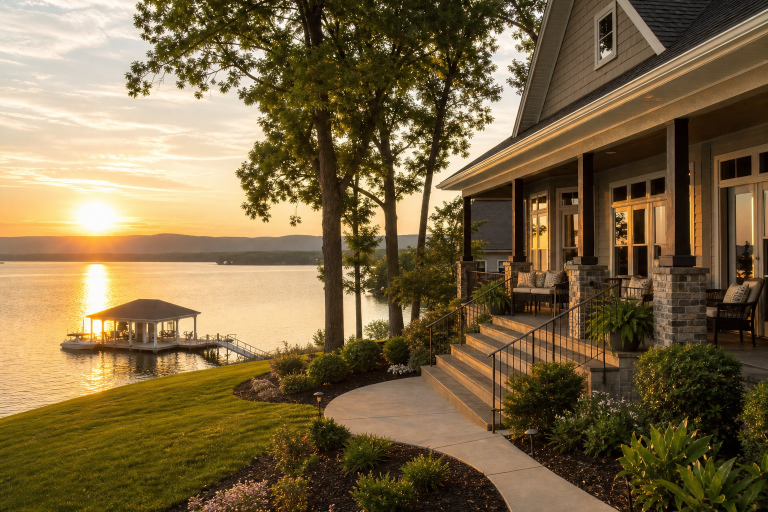
Waterfront ownership offers direct access, private views, and an outdoor lifestyle that is difficult to duplicate. It can be especially appealing for owners who regularly use the lake, entertain outdoors, or want the water to be part of everyday life.
That convenience can come with added responsibility. Shoreline conditions, drainage, erosion, retaining walls, docks, lifts, and seawalls may require attention over time. Moisture exposure can also make careful inspection important. Before closing, consider specialty evaluations for docks, shoreline structures, slopes, drainage patterns, and retaining walls in addition to a standard home inspection.
Lake-Access Homes: A Practical Middle Ground
Lake-access homes can offer meaningful recreation without direct shoreline ownership. Access may come through a recorded easement, a neighborhood dock, an assigned boat slip, homeowners’ association amenities, or a nearby public launch. However, “near the lake” does not automatically mean a buyer has a legal right to use the water from a particular point.
Review the deed, survey, title commitment, recorded easements, HOA documents, and any written boat-slip or dock agreement. Ask whether access is permanent or seasonal, whether it transfers with the property, who maintains shared structures, and whether there are rules for parking, guests, boats, or repairs.
Inland Homes: More Choice and Often Easier Upkeep
An inland home may suit buyers who want more neighborhood options, usable yard space, and fewer shoreline-specific maintenance concerns. It can also make sense for families or retirees who value convenient roads, services, and everyday errands more than immediate access to water.
Living inland does not mean giving up the lake lifestyle. Residents can still enjoy public recreation areas, marinas, trails, restaurants, and local events while returning to a home that may have fewer water-related structures to maintain. Inland buyers should still inspect drainage, roofs, foundations, mature trees, private roads, wells, and septic systems where applicable.
Build a Complete Ownership Budget
Compare every property using the same categories, rather than focusing only on the mortgage payment. Include property taxes, homeowners’ insurance, possible flood insurance, HOA dues, utility costs, travel expenses, and a reserve for repairs. Waterfront owners should also plan for dock, lift, seawall, and shoreline work. Rural or edge-of-town homes may incur additional costs for wells, septic systems, propane, or private road maintenance.
A Simple Three-Number Test
- Estimate the full monthly housing payment, including taxes and insurance.
- Estimate routine yearly maintenance for the house, lot, and any water-related structures.
- Keep a separate reserve for larger repairs, replacements, or storm-related work.
Review Flood Risk and Insurance Early
Flood questions should be addressed before the inspection period is nearly over. Flood maps identify varying levels of risk, but a lower-risk designation does not mean a property is free from possible flooding. Buyers can begin by reviewing flood zones and maps, then request property-specific insurance quotes and ask about prior water damage or insurance claims.
During inspections, pay attention to crawl spaces, basements, driveways, drainage routes, grading, culverts, and visible moisture conditions. A property’s location, elevation, drainage, and construction details can all affect practical risk and insurance costs.
Verify Utilities, Septic Systems, and Access Rules
Some Guntersville-area properties use wells, septic systems, propane, or private roads. When septic is present, arrange an inspection, review permit and service records, and identify the tank and drain-field location. The EPA’s overview of septic system guidance is useful background for understanding maintenance responsibilities and protecting the system after closing.
For waterfront and lake-access properties, confirm whether docks, lifts, and shoreline improvements are permitted, transferable, and insured. Listing photographs are helpful, but they are not a substitute for verifying recorded rights, maintenance duties, local rules, and HOA restrictions with the title company, appropriate authorities, and qualified professionals.
Match the Property to Everyday Life and Resale
Drive the route at normal commuting times. Check the distance to groceries, pharmacies, schools, medical services, marinas, and places you expect to visit often. Test cell service and internet availability, especially at rural properties, and consider road conditions after heavy rain or during busy lake weekends.
When comparing prices, match homes by meaningful features: direct water access, shared access rights, dock or slip availability, lot condition, utility setup, road access, and overall home condition. Waterfront, lake-access, and inland homes can attract different buyer groups, so square footage alone is not enough for a useful comparison.
A Practical Buyer Checklist
- Decide whether the home will be a primary residence, a vacation property, a rental, or a retirement property.
- Choose the level of water access that genuinely fits your routine.
- Create a full ownership budget with maintenance reserves.
- Confirm legal access, dock rights, and shoreline responsibilities.
- Review flood exposure and insurance options early.
- Inspect the home, land, drainage, and specialized structures thoroughly.
- Compare nearby services, commute time, and long-term resale appeal.
Choose the Setting That Fits the Plan
The best Guntersville-area home is not always the one with the closest water or widest view. A confident decision weighs recreation, legal access, insurance, maintenance, convenience, and future goals together. By comparing waterfront, lake-access, and inland homes with the same careful checklist, buyers can choose a setting that supports both their lifestyle and their budget after closing.