
While traveling should be a carefree and relaxing experience, as for most people, it means getting away from their mundane routine or overwhelming life, this is unfortunately not always the case.
Experiencing car issues when you are driving to your dream destination can be annoying, but going through a terrifying accident instead of enjoying your vacation will leave most travelers deeply traumatized.
Although there is no foolproof strategy to avoid a car accident if another driver is responsible for it, you can at least make sure that your vehicle is working properly and is free of issues that can lead to the malfunctioning of your automobile.


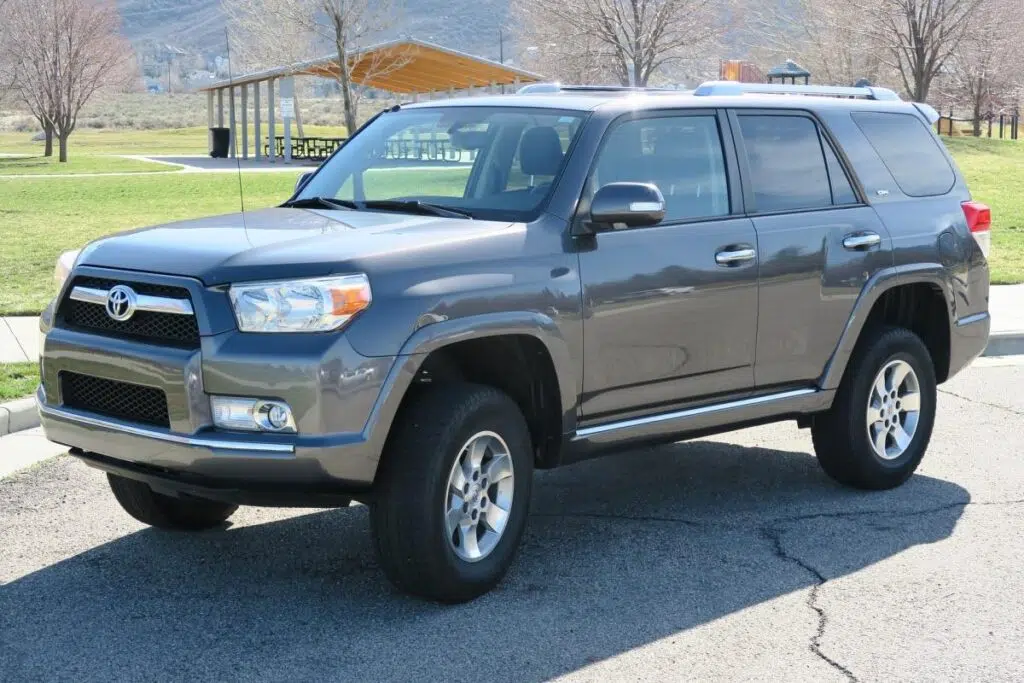
This brings us to the topic of this article, which is the manufacturing defect that Toyota 4Runners from the fourth generation apparently have.
Why Are People Who Drive a Toyota 4Runner More Prone to Suffer a Car Accident?
Before delving into the subject, it is very important to note that only Toyota 4Runners manufactured between 2003 and 2009 are allegedly defective.
Over the course of recent years, there have been increasingly more .
However, the vast majority of them claim that Toyota Motor Corporation has not responded to their concerns.
What prompted the class-action lawsuit that is currently pending against the company was Gary Weinreich, a 69-year-old man from South Carolina, filing a defect petition with the National Highway Traffic Safety Administration.
His complaint made the federal agency investigate Toyota 4Runners made between 2002 and 2006, and in December of 2018, Weinreich filed the lawsuit, which numerous other displeased 4Runner owners subsequently joined.
Therefore, it is the problem of excessive rust corrosion on the frame of Toyota 4Runners from the fourth generation that can make these vehicles unsafe to drive and especially to travel in.
If you are not aware of how severe the rusting on the frame of your 4Runner is, driving it can lead to horrific car accidents, as the corrosion on the undercarriage can easily seep further and damage essential components of the automobile.
As a result, you can suffer the following car accidents, which can be fatal:
- head-on collisions: this happens when the front ends of 2 cars hit each other while traveling in opposite directions and are nearly always a sudden, extremely frightening, and inevitable experience
- rear-end collisions: accounting for 6% of deadly car accidents and for 28% of all car accidents, rear-end collisions occur when a vehicle crashes into the car in front of it
- side collisions: usually taking place at intersections, side collisions entail the side of one or more vehicles being impacted and account for 25% of all car crashes, which makes them quite common
- intersection accidents: a whooping number of automobile crashes occur at intersections, as this type of car accident represents 40% of all that happens throughout the country and involves 2 or more vehicles coming together at an intersection
- vehicle rollovers: this is a car accident that implies a high fatality risk and is generally the result of the driver losing control of the vehicle, which can be caused by a key car part failing due to excessive rust corrosion
- single-car accidents: these are actually the most common car crashes severe rust corrosion leads to, as they are almost every time caused by the driver losing control of the vehicle due to a component falling or breaking off
The injuries you and your passengers, as well as the other drivers or pedestrians involved, can sustain can be terrible and even life-threatening, ranging from compound fractures, internal bleeding, and permanent scarring to paralysis, spinal cord damages, and traumatic brain injuries.

Not to mention that many of the injuries a person can suffer as a consequence of a Toyota 4Runner with excessive frame rust causing a car accident can be deadly.
For this reason, if you own a 4Runner manufactured between 2003 and 2009, you should pay close attention to the condition of its frame before deciding to travel in it.
How Do I Know When Frame Rust Becomes Dangerous?
The only person who has the necessary knowledge and expertise to warn you if there is too much rust corrosion on the frame of your car is a licensed auto mechanic.
If you happen to own a Toyota 4Runner from the fourth generation and intend to keep using it, you should take it for inspections with a focus on frame rust check on a regular basis so as to avoid driving it when it would be dangerous to do so.
When the rust corrosion begins affecting important components of your automobile, your mechanic will let you know.
To understand what “premature rusting” means when it comes to 4Runners, we will compare how fast the frame of a car that was adequately treated against corrosion rusts.
In general, the warranty for vehicle frames is 15 years.
Thereby, if you bought it new, you should expect to notice a little rust on the frame within this period of time, but noting enough to render your vehicle unsafe.
On the other hand, because Dana Holding Corporation has apparently failed to properly treat the frames of 4Runners against rust corrosion, you should expect the frames of these cars to show signs of excessive and dangerous rusting as soon as 5 years following purchase.
About the Author
Jonathan Sharp, Chief Financial Officer and Director of Claims have been working at Environmental Litigation Group, P.C. for more than 20 years. The law firm has a personal injury and product liability as to its primary areas of practice. Some of the key responsibilities of Jonathan Sharp are management of firm assets, financial analysis, and case evaluation. He is also in charge of the proper distribution of the funds.