
All-season tires are those designed to drive through all but the most extreme weather conditions.
Let’s look at the benefits of installing and driving on all season tires.
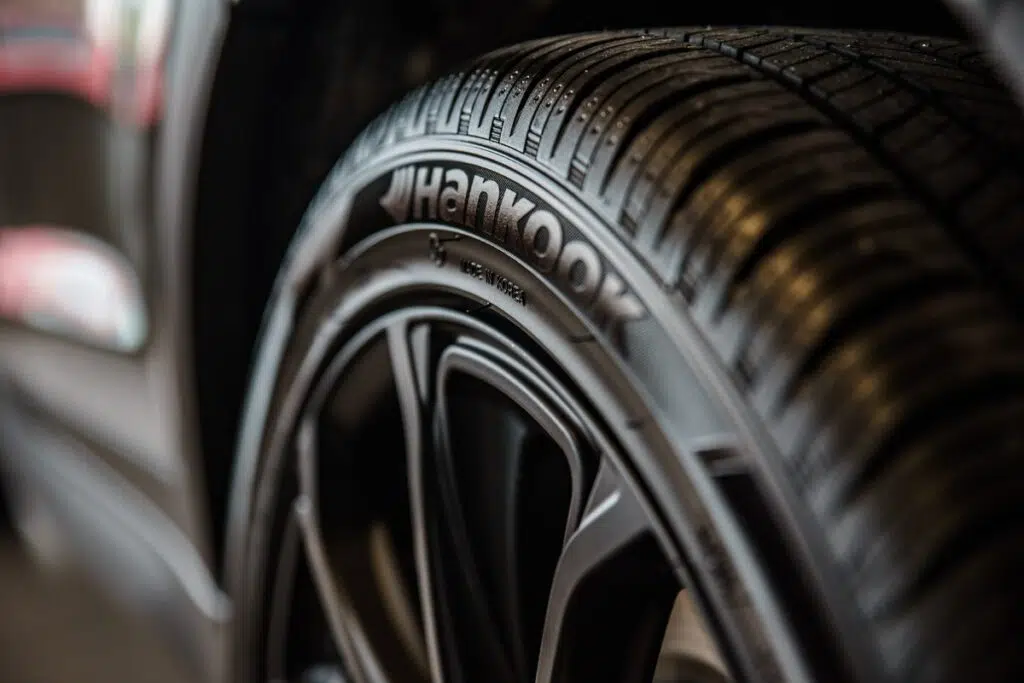
We’ll also explain why you want to rely on all season tires if you’re going on a road trip, whether you’re going cross-country or up into the mountains.
Cost
A single set of all season tires is far cheaper than relying on seasonal tires.
For example, winter and summer tires cost much more than all season tires. Furthermore, you by definition own more than one set of tires.
You might alternate winter tires with all-season tires in a cold climate, or you may use summer tires in a hot climate swapped out with another set when it cools off.
However, you’re still maintaining two sets of tires, one of which is more expensive than the other.
Another benefit of all season tires is that you’ll eliminate the need to swap out tires at least twice a year.
That is an expensive task to outsource to someone else, but few people do the work themselves.
A side benefit of all season tires is that rotating the tires is far simpler, because you’ll have the same tires on the car year-round.
And it will be easier to find a replacement tire that matches the others if you’re using all season tires.
Simplicity
Traveling on all season tires is simpler than trying to manage with summer and winter tires.
For example, all season tires will work on all but the deepest snowy roads. If you’re traveling through the mountains in the summer, you may experience ice and snow, but it isn’t so bad that all-season tires can’t handle it.
More importantly, you’ll have good traction on muddy snow melt and warmer roads at lower elevations.
You don’t have to choose between switching tires as you travel or having worse traction once you reach a location with more moderate weather.
Nor do you have to find storage space for a set of tires you hardly use.
Performance
All-season tires can be simple highway tires or sporty tires that can handle high speeds and some off-road conditions.
And for most people, that’s good enough. All season tires will hold the road if you’re driving at reasonable speeds on wet and dry roads.
And they have enough traction to handle gravel roads and light sand on the highway. They aren’t made for off-roading, but neither are your winter tires.
Note that you can get all season tires for a passenger vehicle or a car. They could be used on a trailer, too, assuming the wheel diameter is a match.
Fuel Efficiency
All-season tires are designed to work equally well in all weather conditions. Furthermore, they’re optimized for a smooth ride while giving you a good grip on the road when you stop.
This results in far better fuel efficiency than winter tires left on your car during the summer.
They tend to have lower rolling resistance than off-road tires, and this improves also improves your vehicle’s fuel efficiency.
Yet you’ll have better handling on turns and hills than standard highway tires that are designed to maximize fuel efficiency.