
Key Takeaways
- Engineered wood products such as Glulam and CLT offer exceptional strength and eco-friendly credentials, setting new standards for sustainable architecture.
- Reclaimed wood is a sustainable choice that adds character and reduces waste to roofing projects, blending history with innovation.
- Certification by organizations like FSC or PEFC ensures wood originates from responsibly managed forests, giving you peace of mind and supporting global conservation efforts.

Modern construction increasingly values sustainability—not just for environmental reasons, but for better long-term performance and value. Today’s society is more conscious than ever about reducing environmental impact, and the building industry is responding by prioritizing eco-friendly solutions. As the built environment evolves, contractors, architects, and property owners are prioritizing materials that offer lasting durability, aesthetic value, and a minimized environmental footprint. Promoting sustainability in construction can lead to energy savings, improved indoor air quality, and the conservation of precious natural resources for future generations. Among these, lumber sourced and used sustainably is at the forefront of roofing innovation. Thoughtful material sourcing and construction practices don’t just benefit the planet—they also contribute to healthier living and working environments. Whether you’re designing residential communities or commercial spaces, selecting wood roof trusses California can be a smart step toward sustainability while ensuring structural excellence. Modern sustainable roofing materials are engineered to be both practical and aesthetically pleasing, making them an ideal choice for forward-thinking building projects.
Sustainable lumber supports greener construction by lowering environmental impact while still providing strength and visual appeal. Because it has lower embodied energy than materials like steel or concrete, it reduces energy use throughout a building’s life cycle. Responsible wood choices also help protect forests, improve energy efficiency, and sequester carbon to offset emissions. With advancements in engineered wood, reused materials, and more efficient manufacturing, builders now have a broader range of eco-friendly options that minimize waste and maximize the value of every harvested tree.
Engineered Wood Products: Strength Meets Sustainability
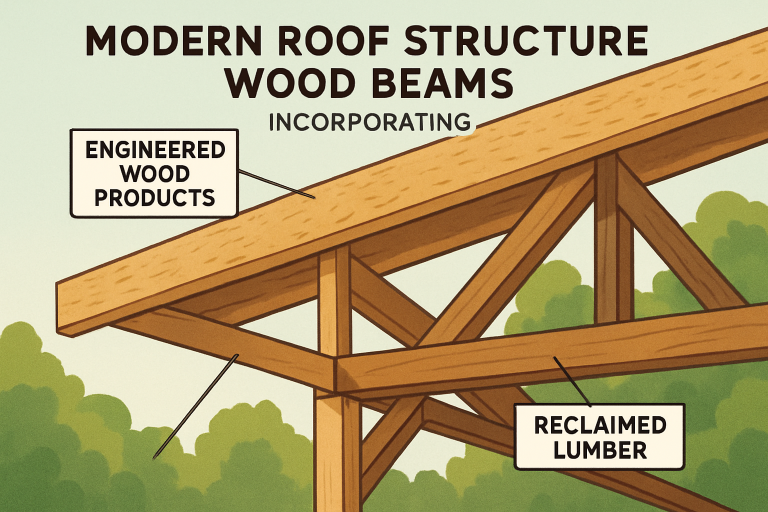
Engineered wood products are transforming how roofs are designed and constructed. These innovative materials use sophisticated techniques to maximize the strength, versatility, and environmental performance of wood. Modern methods combine innovation and eco-consciousness to produce materials that outperform traditional lumber in both strength and reliability. Unlike solid-sawn lumber, engineered products are composed of smaller wood components, often from fast-growing species, that are efficiently combined to deliver consistent, high-quality results. Two of the most prominent sustainable options are Glued Laminated Timber (Glulam) and Cross-Laminated Timber (CLT), both celebrated for their engineering adaptability and ecological benefits. Using engineered wood can significantly reduce waste, as the manufacturing process uses wood that might otherwise be discarded, optimizing resource use across the supply chain.
Glued Laminated Timber (Glulam)
Glulam is made from layers of dimensional lumber bonded with climate-resilient adhesives. This makes the panels and beams exceptionally robust yet remarkably lightweight, compared to steel and concrete, which remain heavy and resource-intensive. Glulam can be manufactured in straight beams and curved forms, unlocking incredible architectural flexibility for designers and builders. Inspired architectural designs —whether sweeping arches or wide spans —become feasible with Glulam, enabling visually striking, structurally sound roofs that would be difficult or economically prohibitive with solid wood or metal. Additionally, Glulam manufacturing capitalizes on smaller, fast-growing trees, thus supporting the conservation of old-growth forests and ensuring that younger, renewable resources are utilized. Adhesives and precision lamination also reduce defects and improve performance under adverse conditions. This innovatively engineered product increases efficiency within the forestry industry and makes large-scale, sustainable spans a reality.
Cross-Laminated Timber (CLT)
CLT involves stacking perpendicular lumber layers and binding them into large, rigid panels that can create entire roof or wall sections. This crosswise design delivers superior structural stability, making CLT ideal for spanning large roof areas and creating impressive open-plan spaces found in schools, offices, and even tall residential buildings. Its greater dimensional stability reduces problems caused by humidity and temperature swings—a key factor in maintaining roof longevity and appearance, as seasonal shifts expand and contract less in CLT than in solid lumber or concrete. Furthermore, CLT panels are manufactured off-site under controlled conditions, dramatically reducing on-site construction time, noise, and waste generation.
Reclaimed Wood: A Second Life for Timber
Reclaimed wood offers a sustainable, character-filled option for modern roofing, blending environmental responsibility with standout visual appeal. U.S. News notes that this material is gaining traction for its warm, eco-friendly charm. Sourced from deconstructed barns, factories, and older urban structures, reclaimed timber carries a sense of history while easing the need for newly cut lumber, which in turn helps curb deforestation and protect wildlife habitats.
Choosing reclaimed wood also keeps valuable materials out of landfills and often results in a stronger, more stable product. Because it has undergone years of natural aging and gradual drying, this wood tends to be exceptionally sturdy, making it well-suited for roofing. Its long-term exposure to the elements typically reduces the risk of warping or shrinking, giving it durability that often matches or exceeds that of fresh lumber.
Aesthetically, reclaimed wood brings unparalleled individuality to modern roof designs. Its weathered textures, varied tones, and distinct grain patterns add authenticity and visual depth that new wood cannot match. Using reclaimed materials also reinforces circular economy practices, ensuring resources stay in circulation longer rather than being discarded prematurely.
Certifications: Ensuring Responsible Sourcing
Environmental responsibility extends beyond material selection to ensuring those materials are sourced correctly and ethically. Lumber certified by groups such as the Forest Stewardship Council (FSC) or the Programme for the Endorsement of Forest Certification (PEFC) guarantees forests are managed with respect for biodiversity, indigenous rights, and regeneration cycles, helping preserve ecosystems for future generations. These certifications also require strict oversight of the social and economic impacts on local communities, supporting fair labor practices and equitable benefit-sharing from forest resources. Ensuring your lumber is certified is a vital commitment to both sustainability and quality control in construction, giving clients confidence that their project meets the strictest green-building guidelines.
Innovations in Sustainable Lumber
Lumber technology is evolving, offering advanced materials that achieve new levels of performance while protecting natural resources. Recent developments—such as Superwood, a type of densified wood that rivals steel for strength-to-weight ratio—are redefining what’s possible for modern roofs. Superwood, along with thermally modified wood and acetylated wood, offers improved resistance to rot, insects, and the challenges of extreme climates, making it a top choice for both longevity and efficiency. These products expand options for builders, enabling them to balance form, function, and footprint while adapting to stricter sustainability standards in evolving building codes. Advanced treatments and precision manufacturing processes also extend lumber’s usable life and resistance to pests and the elements, further boosting its sustainability credentials. As the market for green building materials grows, expect continued innovation that will bring the construction sector closer to a truly circular, sustainable future.
Conclusion
Sustainable lumber selection shapes the future of construction, especially in roof structures where strength, longevity, and environmental impact matter most. With products like Glulam and CLT, along with character-rich reclaimed wood, builders can create resilient and eco-conscious buildings. Certification ensures the ethical sourcing of your materials, while continuous material innovations make it easier to exceed both performance and sustainability goals. Building with sustainably sourced wood isn’t just a trend—it’s a foundational practice that aligns financial, aesthetic, and environmental priorities. Making informed choices means modern roofs can be beautiful, dependable, and ecologically sound for generations to come.