
Table of Contents
- Why Retaining Walls Matter in Sacramento Yards
- Start With the Site, Not the Wall Material
- Drainage Is the Core of a Reliable Retaining Wall
- Choose Materials That Fit the Property
- Permits, Loads, and Local Planning
- Signs an Existing Wall Needs Attention
- Finish the Space Around the Wall Thoughtfully
- Questions to Ask Before Hiring a Contractor
A retaining wall can make a Sacramento yard safer, more functional, and easier to enjoy when a slope, erosion-prone area, or awkward grade limits how the space can be used. Homeowners considering a concrete retaining wall California project can review California Exteriors, a Sacramento-area exterior construction company whose retaining wall service covers planning, installation, repairs, replacement, drainage considerations, and material options, including concrete, stone, brick, and decorative block. That combination of site-focused construction and landscape planning is especially relevant for properties in Sacramento and surrounding communities with uneven grades or recurring runoff concerns.
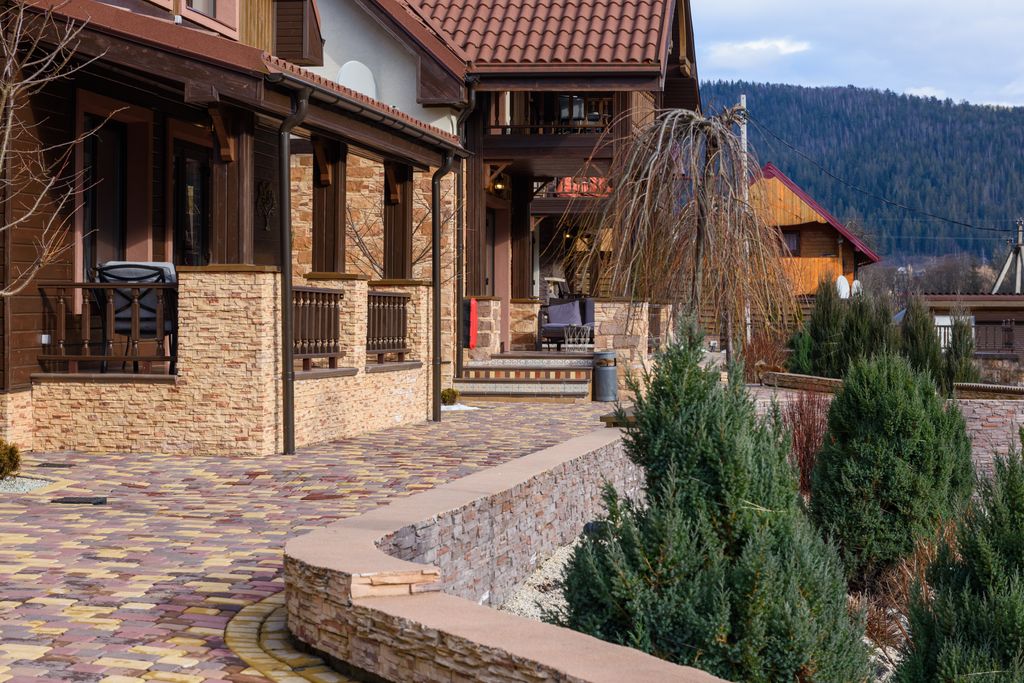
In practical terms, a well-planned wall can hold soil at a controlled elevation while creating flatter areas for a patio, lawn, planting bed, walkway, or seating space. It is not simply a landscape accent. A wall that retains soil must account for the weight of the earth behind it, water movement, the finished grade, and any nearby features that add pressure to the site.
Why Retaining Walls Matter in Sacramento Yards
Sacramento properties range from relatively level suburban lots to yards with backyard banks, side-yard grade changes, and slopes leading toward drainage routes. The region’s winter rains and spring snowmelt from the Sierra Nevada foothills create seasonal water management challenges that make retaining walls particularly valuable. During wetter periods, runoff can carry exposed soil downslope, collect along a fence line, or saturate areas near hardscape. Retaining walls can help organize these transitions, reduce erosion risk, and turn difficult portions of a yard into defined outdoor zones that withstand Sacramento’s variable moisture cycles.
A low garden border may only contain mulch or separate planting areas. A structural retaining wall performs a different job because it holds back soil. The taller the wall and the greater the slope or load above it, the more important it becomes to evaluate drainage, base preparation, reinforcement, and whether professional design is appropriate.
Start With the Site, Not the Wall Material
Choosing between poured concrete, block, natural stone, brick, or timber should come after evaluating the property. The same material can perform very differently depending on soil conditions, wall height, water flow, and the available room for excavation and drainage components.
Review These Conditions Before Design Begins
- Measure the slope and note where the grade changes most sharply.
- Watch where roof runoff, rainwater, and irrigation water travel.
- Identify nearby patios, driveways, pools, fences, sheds, and foundations.
- Look for pooling water, exposed roots, cracks, loose soil, or signs of past movement.
- Consider whether equipment and materials can reach the work area without damaging access routes.
This early review also helps establish the project goal. Some homeowners need erosion control. Others want a level dining area, terraced gardens, or a more usable lawn. Defining the intended result makes it easier to select a wall layout that supports both function and appearance.
Drainage Is the Core of a Reliable Retaining Wall
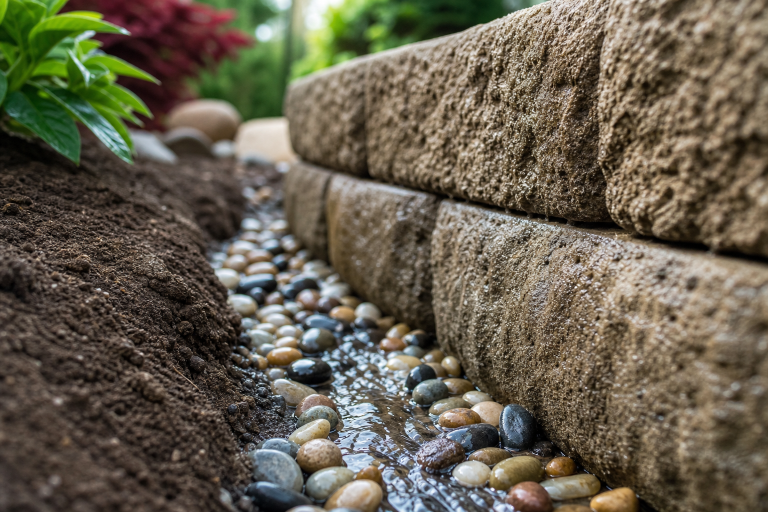
Water behind a retaining wall adds pressure to the soil mass that the wall must resist. A wall can appear solid from the front while water accumulates out of sight behind it. Over time, poor drainage can contribute to cracking, bowing, shifting, or soil washing through joints and openings.
- Establish where surface water should flow before excavation begins.
- Use suitable drainage rock behind the wall where the design calls for it.
- Consider a perforated drainpipe at the base when site conditions and wall design require one.
- Route drainage away from foundations, walkways, and adjacent properties.
- Locate and protect irrigation lines so they do not constantly saturate backfill.
The wall, the soil behind it, the finished grade, and the drainage path should be treated as one connected system. Downspouts and sprinkler overspray deserve the same attention as seasonal rain because both can introduce water where it does not belong.
Choose Materials That Fit the Property
There is no universal best material for a Sacramento retaining wall. The appropriate choice depends on structural needs, wall height, architectural style, maintenance expectations, drainage details, and budget.
- Poured concrete: Suitable for clean lines, curves, and contemporary hardscape designs.
- Concrete block: Often provides a structured appearance with multiple colors and face textures available.
- Natural stone: Can suit garden-focused landscapes and more organic visual styles.
- Brick: May complement traditional homes, existing masonry, or established garden spaces.
- Timber: Can work for smaller landscape applications, though moisture exposure and long-term maintenance require careful consideration.
Permits, Loads, and Local Planning
Permit and design requirements can vary based on wall height, location, grading changes, and whether the wall supports a driveway, building, fence, pool, or upper slope. Before construction, confirm the requirements with the city or county that has jurisdiction over the property. Sacramento homeowners planning larger landscape changes can also review the city’s landscape design requirements, which address planning considerations such as site conditions, plant selection, hardscape, and stormwater practices.
Keep approved plans, inspection records, contractor details, and product information after the work is complete. Those records can be useful for future maintenance, landscaping updates, and property transactions.
Signs an Existing Wall Needs Attention
Do not assume a cosmetic repair solves a structural issue. Photograph changes with dates and arrange an evaluation when movement is visible, new, or increasing.
- A wall that leans outward, bulges, or appears uneven.
- New cracks in concrete, masonry, block joints, or nearby pavement.
- Gaps between the wall and the surrounding soil.
- Muddy discharge, water staining, or blocked drainage outlets.
- Soil, gravel, or mulch spilling over the top of the wall.
- Shifting fence posts, steps, trees, or hardscape near the wall.
Water and soil behavior merit careful attention throughout the Sacramento region. For a broader local context, the U.S. Army Corps of Engineers has conducted testing of water movement and soil conditions behind the Old Sacramento floodwall following high river levels, illustrating why drainage and subsurface conditions should never be treated as afterthoughts.
Finish the Space Around the Wall Thoughtfully
A retaining wall is most useful when it works with the finished landscape. Coordinate stairs or stepping paths where the yard changes levels, add lighting along elevated walkways, and keep drainage outlets accessible. Choose plants suited to the site’s sun exposure and irrigation plan, and avoid locating large trees immediately beside a wall without qualified guidance about mature roots and spacing.
Questions to Ask Before Hiring a Contractor
- How will water move through and away from the retaining wall?
- What base, footing, reinforcement, backfill, and drainage materials are included?
- Will permits, engineering, or inspections be needed?
- Who handles excavation, demolition, final grading, cleanup, and utility protection?
- How will nearby fences, patios, trees, and structures be protected?
- What maintenance should be expected after installation?
Compare written estimates by scope, drainage details, materials, and preparation work, not price alone. In Sacramento, the most durable retaining wall projects begin with a clear understanding of the yard, a practical plan for water, and a design that creates usable outdoor space without ignoring the forces behind the wall.