This post contains affiliate links. If you buy through these links, I may earn a small commission at no extra cost to you. Read my full disclosure policy here.
Yes, granite generally requires slightly more maintenance than quartz, but the difference is smaller than many homeowners expect. Granite may need occasional sealing and gentle cleaners, while quartz does not require sealing but is more sensitive to heat. Understanding these differences requires looking at how each material is made.
Quartz countertops are manufactured in factories rather than quarried, unlike natural granite. This difference plays an important role when comparing quartz vs granite countertops. Granite has microscopic pores that can absorb liquids, while engineered quartz is nonporous. As a result, granite needs occasional sealing, whereas quartz does not.
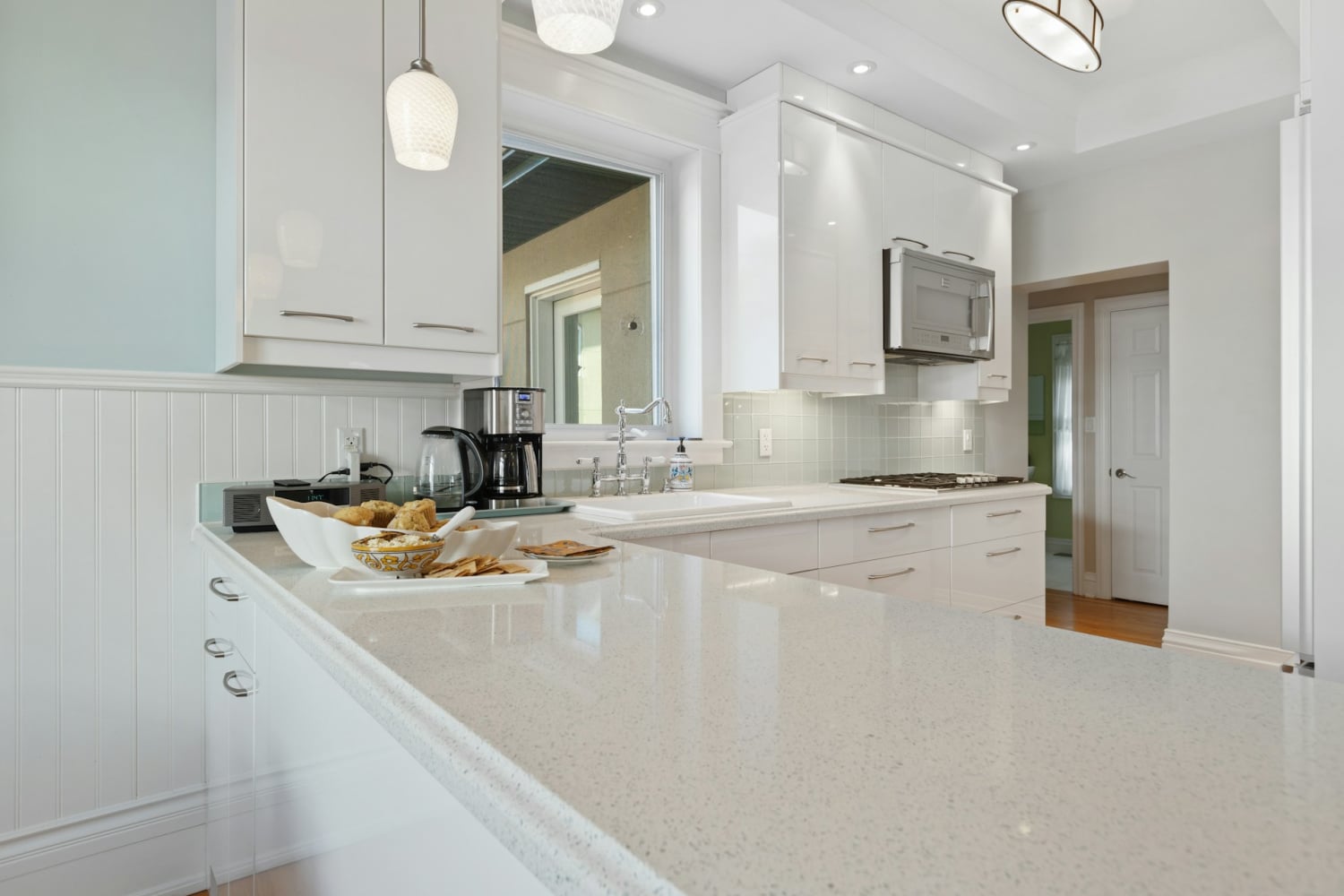
The sections below compare sealing, cleaning, stains, and heat for both materials.
Why Granite Needs a Little More Attention
Granite's natural pores are the main reason it asks for a bit more care. Two habits make the biggest difference: sealing when needed and choosing the right cleaner.
Sealing: The Biggest Difference
Sealing is the main extra task granite owners face. However, the Natural Stone Institute states that most granite countertops do not need sealing, although a quality sealer can further reduce moisture absorption. Light-colored and more porous slabs benefit most, since stains show more easily on them.
A simple water test tells you where your countertop stands. Place a few drops of water on the surface and wait several minutes. If the stone darkens, it is absorbing liquid and may need a sealer.
Choosing the Right Cleaner
Granite responds best to mild, pH-neutral cleaners. Acidic products, such as vinegar or lemon-based sprays, can wear down a sealer over time. Warm water and a little dish soap handle most daily mess.
Where Quartz Still Needs Care
Quartz is low-maintenance, but it is not maintenance-free. According to an OSHA and NIOSH hazard alert, engineered stone can contain up to 95% crystalline silica, with resins, pigments, and adhesives making up the rest. That resin keeps liquids out, but it also creates a few weak points:
- Heat: Hot pans can scorch or discolor the resin, so trivets are essential.
- Sunlight: Long exposure to direct sunlight may cause some quartz colors to fade.
- Harsh chemicals: Oven cleaners and strong solvents can dull or damage the surface.
How Your Cooking Habits Change the Answer
When weighing quartz vs granite countertops, your cooking habits matter as much as the material. For instance, someone who often cooks with turmeric, wine, or oil may notice stains on unsealed light granite. On the other hand, a home baker who sets hot sheet pans down quickly may find quartz the riskier surface.
Practical Tips for Granite Countertop Maintenance
- Wipe up oil, wine, and coffee on granite promptly.
- Keep trivets near the stove if you choose quartz.
- Use cutting boards on both surfaces to protect the finish and your knives.
- Follow your fabricator's care guide, since products and treatments vary.
Final Takeaways
- Granite needs slightly more maintenance than quartz, mainly because it is porous.
- Most granite countertops do not need sealing, but light or porous slabs often benefit from it.
- A water drop test is the easiest way to check whether granite needs a sealer.
- Quartz never needs sealing, but its resin makes it vulnerable to heat and harsh chemicals.
Both surfaces clean easily with mild soap and warm water.