
In today’s fast-paced world, feeling overwhelmed, stressed, or anxious is all too common.
We’re constantly bombarded with information, to-do lists seem endless, and finding moments of peace can feel like a luxury.
But what if there existed a simple yet powerful tool readily available to help us navigate these challenges and cultivate inner calm?
Enter mindfulness – an ancient practice experiencing a modern resurgence for a good reason.

The Connection Between Mindfulness and Mental Health
The practice of mindfulness has emerged as a powerful tool for cultivating mental clarity, emotional balance, and overall well-being.
Studies have demonstrated a direct link between mindfulness and improved mental health outcomes, indicating a reduction in symptoms of anxiety and depression.
Mindfulness can also play a significant role in addressing addiction, and by promoting greater self-awareness and emotional regulation, mindfulness practices can help individuals better understand their triggers and cravings, and respond to them in a more constructive manner.
Several mindfulness-based interventions have been shown to reduce the risk of relapse and promote long-term recovery in individuals struggling with substance abuse or behavioral addictions.
Mindfulness achieves these results by reshaping the structure of our brains. It increases gray matter density in the prefrontal cortex – the region associated with attention, emotional regulation, and decision-making.
Conversely, it reduces activity in the amygdala, the brain’s emotional processing center, leading to better management of stress and anxiety.
Mindfulness as a Tool for Emotional Regulation
One of the key benefits of mindfulness is its profound impact on our ability to regulate emotions.
By cultivating a non-judgmental awareness of our thoughts and feelings, mindfulness enables us to respond to emotional triggers with greater clarity and control.
Consider being stuck in traffic and frustration starting to build. With mindfulness, you can observe the feeling of anger without getting caught up in it. You recognize the emotion, breathe through it, and respond more constructively, rather than reacting impulsively.
By practicing mindfulness techniques like body scans, breath awareness, and loving-kindness meditations, individuals can cultivate greater emotional resilience and navigate life’s challenges with a more balanced perspective.
Long-Term Benefits of Mindfulness on Well-being
While the immediate benefits of mindfulness are profound, its true power lies in its ability to transform our overall well-being over the long term.
Studies have shown that even years after completing a mindfulness course, participants reported significantly higher levels of life satisfaction and lower levels of depression and anxiety.
Mindfulness isn’t just about alleviating negative emotions; it’s also a pathway to greater happiness and fulfillment. By training our minds to be present in the moment, we can savor the beauty and richness of life, fostering a deeper sense of gratitude and contentment.
Implementing Mindfulness in Daily Life
The beauty of mindfulness lies in its accessibility.
You don’t need any special equipment or location – just a willingness to be present and engage with the present moment. Here are some practical tips for integrating mindfulness into your daily routine:

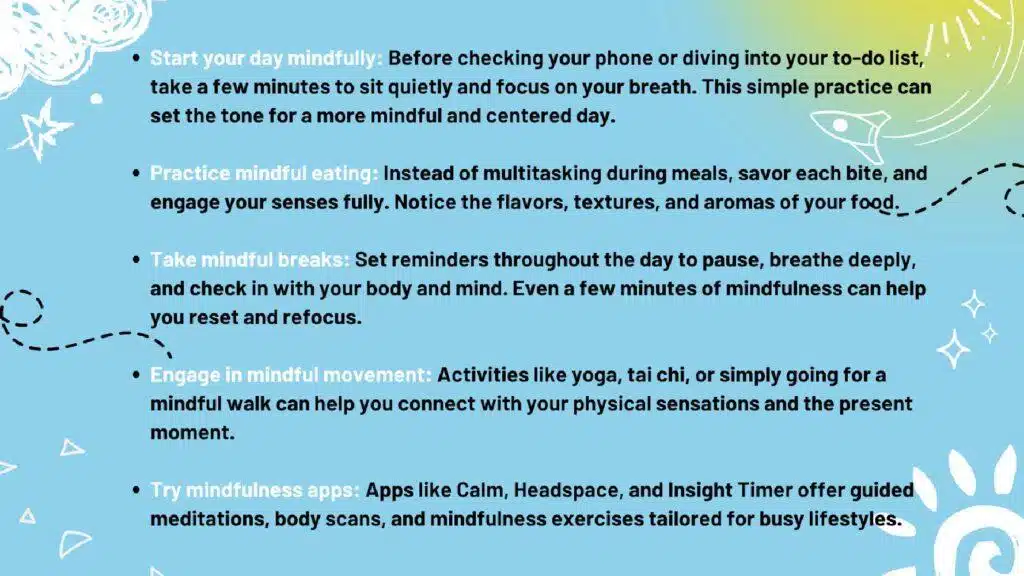
Consistency is key when it comes to reaping the full benefits of mindfulness. While it may seem challenging at first, aim to practice for at least 10-15 minutes daily, gradually increasing the duration as it becomes more comfortable.
Challenges and Considerations in Mindfulness Practice
Like any new skill, mindfulness requires patience and perseverance. One of the most common challenges beginners face is the tendency for their minds to wander or become distracted during practice. It’s important to remember that this is a natural part of the process and not a sign of failure.
Approach mindfulness with an attitude of curiosity and self-compassion. When you notice your mind wandering, gently bring your attention back to your breath or the present moment, without judgment.
Another potential misconception is that mindfulness requires a completely quiet or distraction-free environment. While a peaceful setting can be beneficial, mindfulness can be practiced anywhere – even in the midst of noise or chaos. The goal is to cultivate a non-judgmental awareness of your present experience, whatever it may be.
It’s also important to recognize that mindfulness is not a panacea for all mental health issues. While it can be an incredibly valuable complement to therapy and medication, in cases of severe depression, anxiety, or other mental health conditions, it’s advisable to seek professional help and support.
Comparison Table: Mindfulness Apps
Here’s a comparison of some popular mindfulness apps to help you find the best fit for your needs:
| App | Key Features | Pricing |
| Calm | Guided meditations, sleep stories, mindful music, breathing exercises | Free with paid subscription options starting at $14.99/month |
| Headspace | Guided meditations, sleep casts, mini meditations, animations | Free with paid subscription options starting at $12.99/month |
| Insight Timer | Vast library of free meditations, courses, music, live events | Free with optional paid courses and memberships |
| Simple Habit | 5-minute guided meditations, meditation plans, sleep tracks | Free with paid subscription options starting at $11.99/month |
Frequently Asked Questions
1. What are the tangible signs that mindfulness is improving my mental health?
Some common indicators that mindfulness is having a positive impact on your mental health include:
– Improved sleep quality
– Reduced feelings of anxiety or stress
– Greater emotional stability and resilience
– Heightened focus and concentration
– Increased self-awareness and self-acceptance
Remember, these benefits may manifest gradually, so it’s important to be patient and consistent with your practice.
2. How long does it take to see the benefits of mindfulness?
The timeline for experiencing the benefits of mindfulness can vary from person to person. However, many individuals report feeling a sense of calm and clarity even after their first few sessions.
More substantial effects, such as improved emotional regulation and reduced stress levels, typically become noticeable within 4-8 weeks of regular practice.
It’s important to approach mindfulness as a journey, rather than a quick fix. The more you commit to the practice, the more profound and lasting the benefits will be.
3. Can mindfulness replace other forms of mental health therapy?
While mindfulness can be an invaluable tool for improving mental health, it should not be seen as a replacement for professional therapy or medical treatment.
Mindfulness can be an excellent complement to traditional forms of therapy, but it is not a substitute for seeking professional help when needed.
For individuals struggling with severe mental health conditions, such as clinical depression, anxiety disorders, or trauma-related issues, it is strongly recommended to work with a qualified mental health professional.
Mindfulness can be a supportive practice alongside professional treatment, but it should not be relied upon as the sole solution.
Conclusion
Mindfulness is a powerful practice that can significantly improve mental health and overall well-being.
By cultivating a non-judgmental awareness of the present moment, we can better regulate our emotions, reduce stress, and experience greater happiness and life satisfaction.
Incorporate mindfulness into your daily routine and embark on a journey of self-discovery and personal growth.