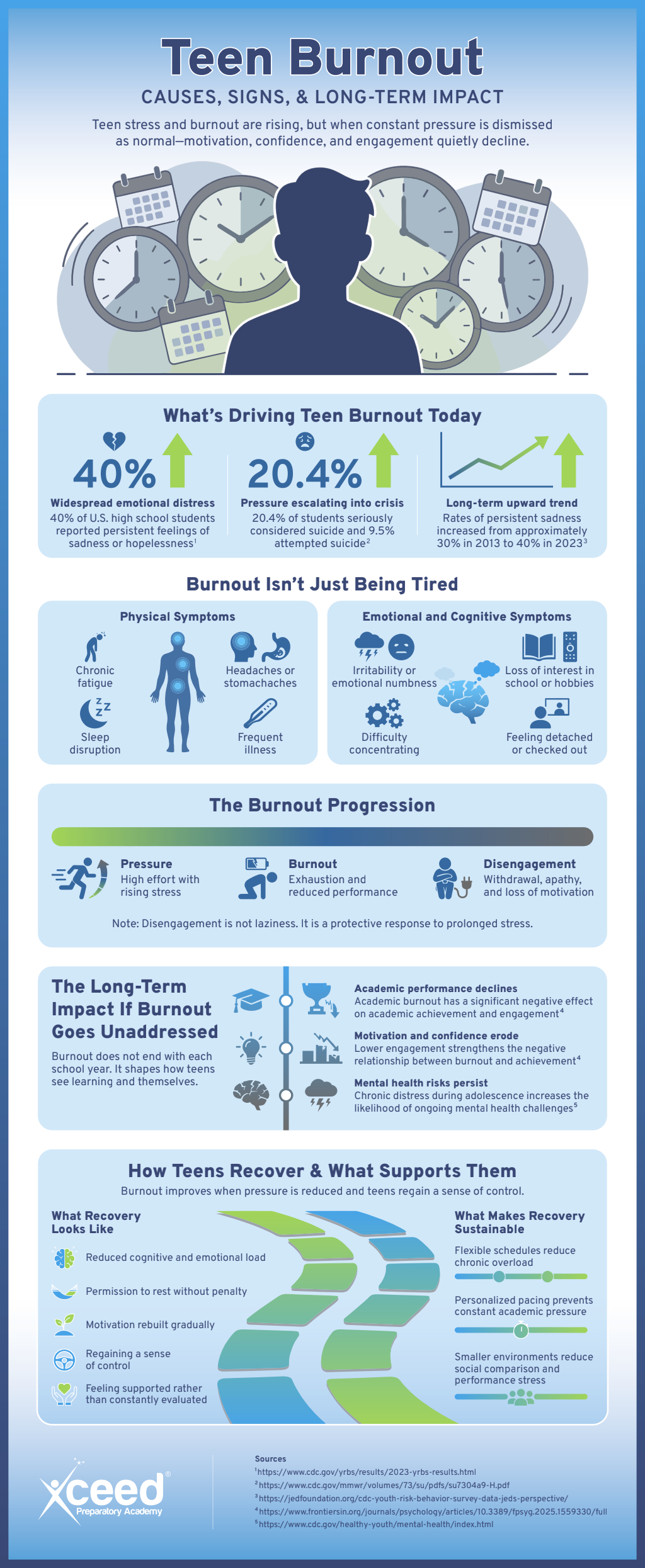
Teenagers today often balance demanding schedules filled with academic responsibilities, extracurricular activities, social expectations, and personal goals.
While these opportunities can encourage growth and achievement, constant pressure may also lead to burnout.
Teen burnout develops when prolonged stress leaves young people feeling mentally and physically exhausted.
Recognizing the causes and signs early can help families and educators support teenagers before the effects begin to interfere with their well-being and long-term development.


What Causes Burnout in Teenagers
Several factors contribute to burnout during adolescence. Academic pressure is one of the most common causes. Many students strive to meet high expectations related to grades, college preparation, and competitive programs. Long study hours and frequent testing can create sustained stress.
Extracurricular commitments can also increase pressure. Sports teams, music programs, volunteer work, and leadership activities often require significant time and energy.
When combined with academic workloads, these responsibilities may leave little time for rest or recreation.
Social expectations add another layer of strain.
Teenagers often feel pressure to maintain friendships, manage online interactions, and meet cultural or family expectations. Students attending highly competitive academic environments, including some private schools, may experience additional pressure related to performance and achievement.
Signs That Burnout May Be Developing
Burnout often appears gradually rather than suddenly. Emotional exhaustion is one of the earliest indicators. Teenagers may report feeling constantly tired, overwhelmed, or unmotivated, even when tasks are manageable.
Changes in academic performance may also occur. Students who previously completed assignments on time may begin missing deadlines or showing reduced concentration in class. Difficulty focusing during study sessions can signal mental fatigue.
Physical symptoms sometimes accompany emotional strain. Headaches, stomach discomfort, and persistent fatigue may appear when stress levels remain high for extended periods.
Behavioral changes may also develop. Teenagers experiencing burnout may withdraw from activities they once enjoyed or become more irritable with friends and family.
Some may express feelings of hopelessness about school or future goals.
Long-Term Impact on Health and Development
Burnout during adolescence can affect long-term emotional and physical health. Persistent stress may increase the likelihood of anxiety, depression, or other mental health concerns if left unaddressed.
Academic motivation may also decline over time. Students who feel consistently overwhelmed may begin to associate learning with stress rather than curiosity or growth.
This shift can influence educational choices and future career development.
Sleep disruption and prolonged fatigue may also affect physical health. Teenagers who experience ongoing exhaustion may struggle to maintain balanced routines related to exercise, nutrition, and rest.
Burnout can also influence self-confidence.
When teenagers feel unable to meet expectations, they may begin to doubt their abilities even when they possess strong skills and potential. Teen burnout highlights the importance of balance during a stage of life filled with rapid growth and change.
Academic success and personal development remain important, yet young people also need time for rest, social connection, and creative interests.
Recognizing the signs of burnout and addressing its causes can help families create healthier environments that support both achievement and well-being. Check out the infographic below for more information.