
Onychomycosis, also known as nail fungus, is a very common nail problem affecting more than 23 percent of the European population.
It accounts for about 50 percent of all nail problems.
Onychomycosis affects both fingernails and toenails, with the latter much more affected.
Nail fungus is usually a harmless or mild condition, which is why most people do not take it seriously.
Unfortunately, it can also be a potentially dangerous situation that requires immediate attention.
Therefore, it is important to pay attention to changes in both the shape and the structure of the nail in order to be able to start treatment early especially in cases when nail fungus is representative of serious cases of underlying health issues such as diabetes.
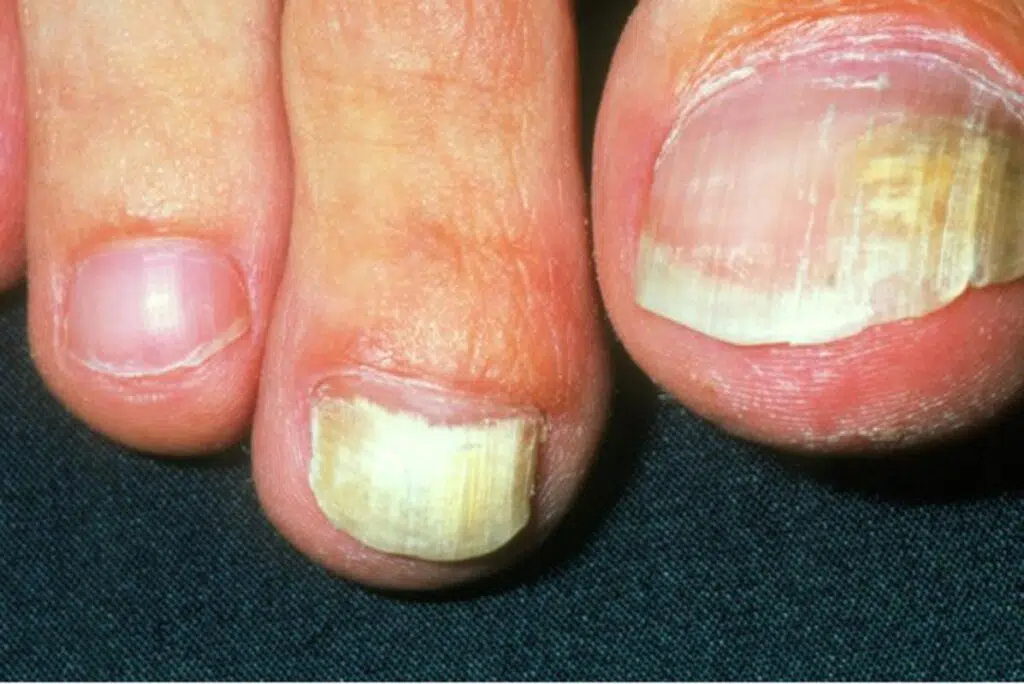
Onychomycosis or nail fungus is a very notorious infection that spreads very fast and quickly.
The treatment is also a challenging one, and will normally take a few months to achieve restoration of healthy nails yet the rate of recurrence is very high.
Risk factors or causes of Onychomycosis
- Underlying health issues: nail fungus could sometimes be an indication of underlying health issues which is one of the reasons it must be treated immediately. Underlying health issues such as diabetes result in a weakened or depressed immune system compromising the body’s ability to fight off infections such as Onychomycosis.
- Age: as we age, the nails tend to go through varying degrees of change such as the thickness as well as the coloration. This could be as a result of injuries or trauma. It could also be a result of reduced blood circulation to the body extremities, a situation that lets nail fungus thrive. Also, the immune system gets weaker with age hence is not able to fight off infections as effectively as it used to.
- Genetics or family history: People who have a family history of nail fungus are more likely to have nail fungus hence must pay more attention to the way they live.
- History of athlete’s foot: anyone with previous cases of athlete’s foot is prone to having Onychomycosis hence should be cautious.
- Lifestyle: This is perhaps the biggest risk factor of nail fungus – the way you live. For example, walking barefoot in a locker room or public swimming pool exposes you to nail fungus. Similarly, what you eat plays a key role. You should also pay attention to how you share things like nail tools as well as shoes.
- Sweaty foot: nail fungus thrives in a moist and warm environment hence a sweaty foot provides a great breeding ground. Try to keep your feet as dry as possible always.
- Nail hygiene: always keep your nails clean and as short as possible but not too short.
Symptoms
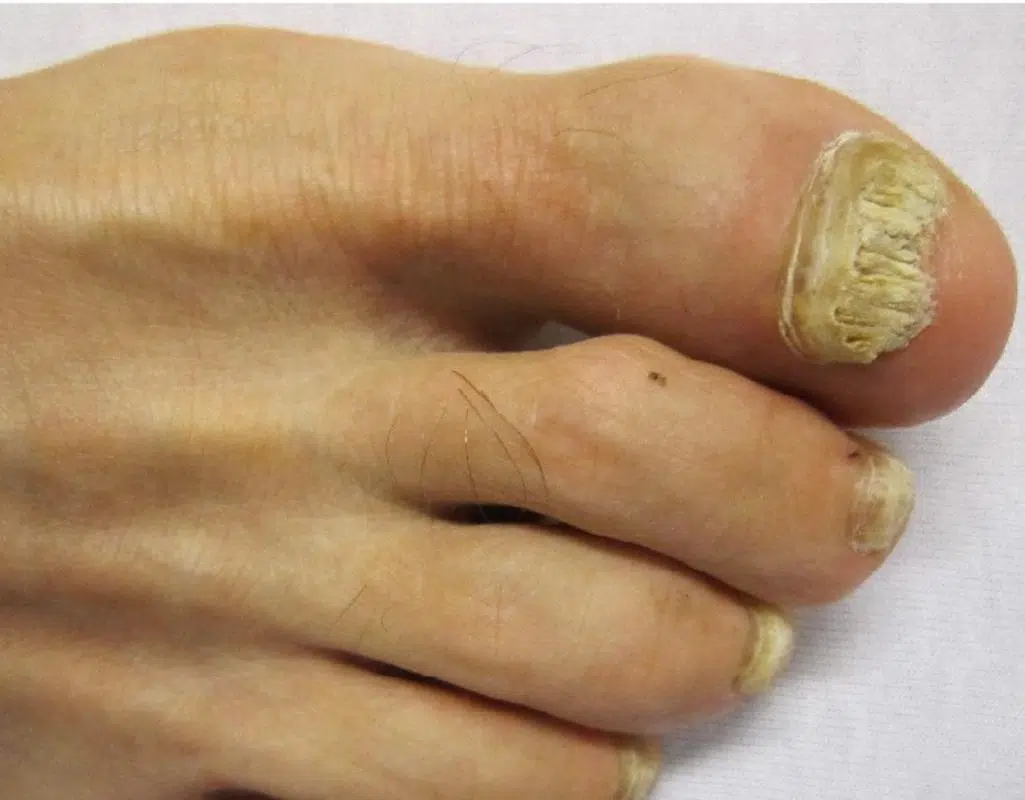
Onychomycosis usually begins as a tiny spot beneath the tip of the nail but can quickly develop to give more signs including:
- Discolored nails
- Thickened nails
- Crumbly or brittle nails
Treatment of Onychomycosis
There diverse treatment options for nail fungus including medical options, over-the-counter products, as well as home remedies.
Medical options are usually the fastest and the most effective but are not without side effects that can be as serious as causing damage to internal organs.
The next most effective treatment options are over-the-counter products, of which EmoniNail is one of the best.
This is a very effective topical treatment for Onychomycosis.
With proper and consistent use, nails will be restored to their healthy state.
EmoniNail contains active Acid, Sunflower seed oils, and Tea tree oil.
These are powerful ingredients; Undecylenic acid works to soften the nail and change the pH of the environment while tea tree oil contains key elements that fight the nail fungus.
It will effectively eradicate nail fungus and restore the health of nails.
Home Remedies

The last treatment options for nail fungus are home remedies.
These are cheap and easily accessible home ingredients that are rich in antifungal properties.
Though they may not act as fast as medications and over-the-counter products, they are effective in treating nail fungus.
They include:
Tea tree oil: this is one of the most effective home remedies and is a key ingredient in EmoniNail. It is rich in antifungal properties. It is for external use only.
Coconut oil: this is a highly therapeutic oil loaded with antifungal properties.
Apple cider vinegar, Garlic, baking soda, and hydrogen peroxide are also common home remedies.
Onychomycosis is a common nail problem; it does not just change the color of the nail but also the shape or structure of the nail.
Though challenging to treat, there are effective treatment options such as EmoniNail as well as home remedies.