
Buildings commonly have cracks in their walls; some are harmless, while others indicate a sinking foundation (subsidence).
The damage to the foundation can quickly devalue a property if you fail to address problematic cracks in walls.
What does subsidence repair cost?
Step 1:
Use our online form to submit your enquiry. Please include a brief description of the foundation issues you are experiencing.
Step 2:
A member of our friendly customer service team will contact you to schedule a convenient time for your site assessment.
Step 3:
Our mainmark.com experts will assess the damage to your home or property and determine the likely cause and fix it.
Upon determining the approach needed, they will develop a plan customised to your building’s needs and provide you with a detailed quote.
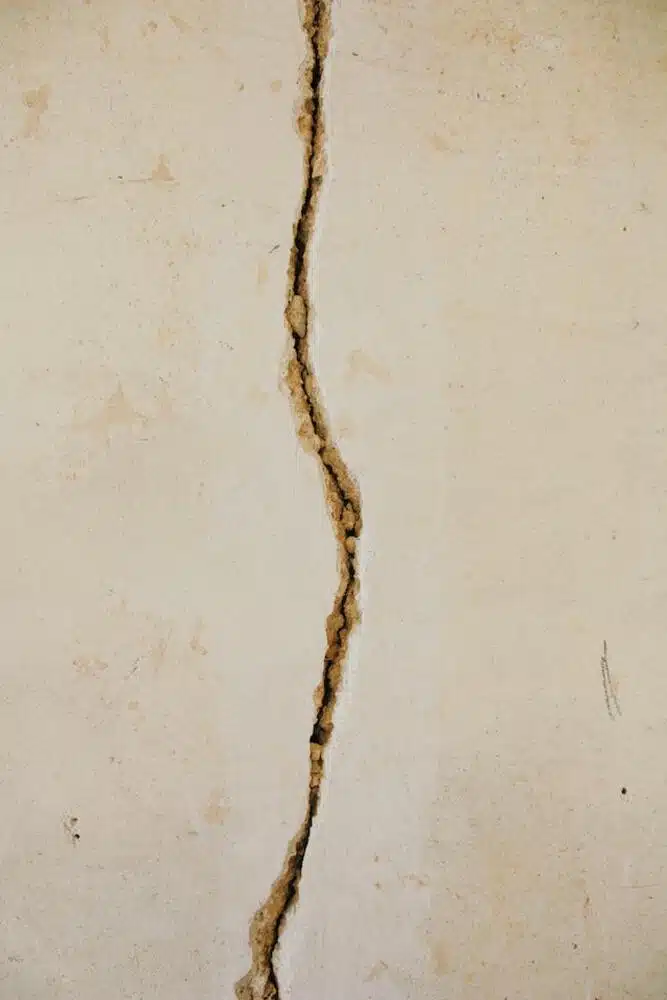
Home walls with cracks
Whether it is a commercial building or a residential home, Mainmark’s level correction methods can be used to correct cracks in walls.
In order to determine the cause of the damage, we assess your home. We create a plan specific to your house based on our engineers’ and technicians’ experience.
Re-leveled houses often develop cracks in their walls, which can occur internally and externally.
Lifting and re-leveling the foundations is required for these houses. In most cases, wall cracks close up as the building is re-leveled, requiring only cosmetic repairs, such as patching and painting.
The most important thing is that structural damage is repaired and the future of the house is secure. Similar to keyhole surgery, our cutting edge solutions replace traditional concrete underpinning.
In addition to raising and re-levelling concrete slabs, we can also fill gaps in paths and driveways, plus raise and relevel strip footings.
Subsidence signs: what to look for?
Subsidence and voids under the ground can cause sinking floors, cracked walls, jammed doors and windows.
It is commonly caused by unstable or weak ground, a broken pipe that causes soil erosion, water changes in clay soil, nearby building and excavation works, and seismic activity or liquefaction.
In comparison to concrete underpinning, our solutions are cutting edge and the modern answer to traditional underpinning.
In addition to concrete slab floors, we offer alternatives to underpinning.
In addition to underpinning, raising, and re-leveling strip footings and raft slabs, we can infill under slabs and driveways as well.
Why do walls crack so much?
The foundation of a building may have shrunk or lost its strength, causing all or part of the building to sink, known as subsidence.
There is usually too much or too little moisture in the soil under the settled section of a building.
Wall cracks: how to fix them
Lifting, re-leveling, and re-supporting the building is the best long-term solution to large cracks. Underpinning is a method of level correction.
Buildings that have been re-leveled may have cracks that close or become smaller (ready for plastering or rendering for fine patching and repainting).
It is also common for windows and doors to begin working again after a time.
In traditional underpinning methods, parts of the foundation are excavated or dug up, concrete is poured in, waited for it to set, and then the building is jack-up off those concrete blocks.
Time-consuming and messy, this traditional method can take weeks or even months.
In most cases, you will have to leave part of the building or the entire building while tradespeople are working on it.