
In 2013, four collectors bid against each other for ten minutes over a 17th-century rug that eventually sold for $33.8 million. Now, ten years later, this is still the most expensive rug ever bought at auction.
If you’re refurbishing your home, this type of rug is likely out of your price range, but you’re probably wondering what makes this piece so valuable.
Apart from its age, the craftsmanship, materials, and weave all contribute to the value of this Persian masterpiece.
Keep reading to find out how different rug weaves can impact your home decorating decisions.

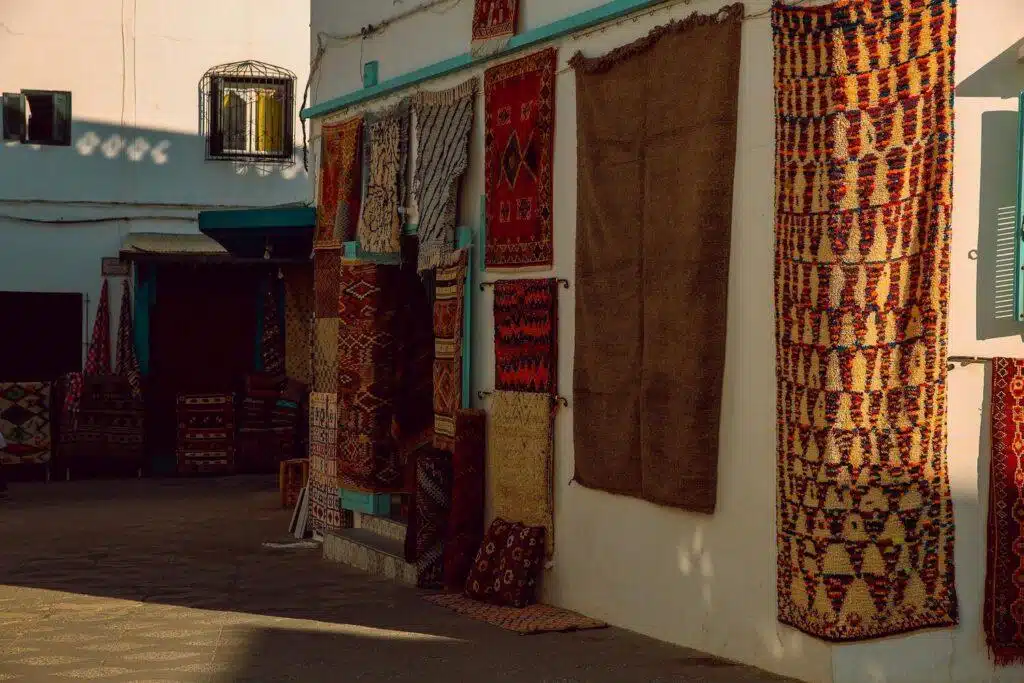
Why Does Weave Matter?
Weaving is the art of turning yarn or a thread into fabric by interlacing warp and weft threads. The term ‘warp’ refers to the lengthwise threads on a loom, while ‘weft’ refers to the thread that winds over and under the warp.
These two factors influence everything about the appearance and durability of a rug and its price.
Texture
Some rugs are entirely handmade, created using tools, or made on a machine. Some rugs stem from a combination of these techniques.
Machines can make rugs much faster than crafters can, but the slow process of creating a rug by hand gives the creator more control over its texture.
They can adjust the rug’s look and feel by using different materials and techniques as they go along.
Pile
The term ‘pile’ refers to the density and height of the fibers in the rug. The denser it is, the better its quality.
Longevity
The weave, craftsmanship, and materials that go into making a rug greatly impact how long it will last.
However, some very high-quality rugs aren’t intended for everyday use. If you’re looking for a rug suited to a high-traffic, humid area like a bathroom, it’s best to shop around for a jute or machine-made rug.
Price
Handmade and hand-knotted rugs involve many hours of precise craftsmanship.
For instance, one hand-knotted rug may contain as many as 800 knots per square inch. It can take a weaver over 3,000 hours to complete one of these fine rugs.
As a result, they cost a lot more than machine-made rugs.
That’s not to say that all machine-made rugs are inferior. Some very high-quality machine-made rugs are available, but you’ll still pay less for them because they’re mass-produced.
Hand-Knotted Rug Weaves
Weavers create hand-knotted rugs on a large loom with warp and weft threads. They intertwine threads through the warp and the weft to create knots, which they trim afterward to create the texture of the carpet.
Traditional Oriental and Persian rugs are examples of this type of rug. They knot each rug entirely by hand, and the fringe is never sewn on. It’s a natural progression of the warp fibers used to construct the rug.
The Pazyryk Rug, unearthed in 1949, is the oldest example of a hand-knotted rug. It dates back to 5 B.C. and is a testament to the durability and long-lasting beauty of these styles of rugs.
High-quality natural materials like silk, cotton, and wool go into making these rugs, and each one is unique. Despite the care that goes into creating them, hand-knotted rugs are rarely without small defects due to human error.
This only adds to their charm and desirability. They’re not available in varying sizes with the same design, and most have unique patterns, although most have a few traditional elements to them.
Persian rugs usually have a border, a field, and a medallion or pattern with a specific meaning. They’re the highest quality of all Oriental rugs, made from sheep wool and dyed with natural plant dyes.
Other countries, like China and India, produce similar rug styles, but only rugs crafted in Iran are true Persian rugs.
Hand-knotted rugs typically have a soft, fine texture and no backing, so they’re reversible. The more knots per square inch they contain, the more durable they are, and the more you can expect to pay for them.
Handmade Types of Rug Weaves
While hand-knotted weaves are also handmade, the following types of rugs differ in that weavers use certain tools to create them: There are no tools involved in crafting hand-knotted rugs.
A loom is the main tool used to create handmade rugs. It comprises a frame to hold the taut warp fibers and a beater to compress the weft threads.
There are three main types of handlooms: stand looms, pit looms, and frame looms.
Hand-Loomed Rugs
It takes between one and four people to create a hand-loomed rug, depending on the size of the rug. They set the loom up with thin vertical pipes running along the warp to create the pile.
One person weaves the weft thread through the warp and the pipes, then another one pushes the thread down with a ‘beater’, which meshes the warp and weft together.
Afterward, they cut along the pipes to create a fuller pile effect and then they remove the pipes. Sometimes the weavers add synthetic latex to these rugs to increase their durability.
Some well-known designs created using a hand loom include Dobby, Leno, and Jacquard.
Flat-Weave Rugs
Flat-weave rug artisans follow the same technique as above, minus the pipes. The result is a flat, double-sided, lightweight rug.
Some flat-weave rugs also have hand-tied knots. Rug weavers use the Persian method, but they don’t cut the knot after the second loop.
Instead, they continue with the same thread, interchanging this method with regular Persian knots.
Many of these creations have striking designs created by varying the colors of the weft and warp fibers. As they’re lightweight and thin with no backing, it’s best to place a non-slip pad underneath them for household use to prevent slipping.
These rugs have no pile that can collect dirt, so they’re easy to keep clean, too.
Some of the most popular types of flat-weave rugs are:
Dhurrie
Dhurrie rugs hail from India and usually come in pastel shades or muted colors. Wool or cotton dhurrie rugs are an excellent choice for high-traffic areas as they’re exceptionally durable.
Kilim
Kilim rugs are another Persian creation featuring bold designs and bright colors. The best ones come from Turkey and Serbia, where they’ve been a part of local culture since 9 A.D.
These rugs are another durable choice suitable for busy areas in the home.
Hand-Hooked and Hand-Looped Rugs
Hand-hooked and hand-looped rugs are like tapestries that haven’t had the threads pulled through the backing canvas completely.
Artisans thread small loops of fiber through a canvas with small squares woven into it. Afterward, they secure the thread with a protective backing to keep the loops in place.
These rugs have a soft, knobbly texture and come in a multitude of patterns, pictures, and colors. They’re durable and sometimes made from water-resistant synthetics, making them suitable for outdoor use and bathrooms.
These rugs also work well for adding texture and interest to a living room or bedroom rather than high-traffic areas due to the fragile nature of the loops.
Hand-Tufted Rugs
These rugs are partly handmade. Weavers also use a tool called a tufting gun in the weaving process.
They start with a pre-woven backing material stretched taut on a frame. This material is usually made from cotton, jute, canvas, or polyester and has small squares woven into it.
A worker creates small tufts by loading wool threads into the tufting gun and then using the gun to punch them through the backing according to a prescribed pattern.
Finally, they shear off the tufts to create the desired pile density and add a latex-coated fabric backing to keep the threads in place. They sew or glue the fringe of the rug in place.
Tufting a rug is a much quicker process than knotting threads by hand, and unskilled laborers usually complete this task quickly in a factory setting.
This makes hand-tufted rugs cheaper than most handmade rugs. Machine-made ones are even cheaper.
Although they’re not as prestigious as hand-crafted rugs, hand-tufted rugs do have a pleasant, soft feel underfoot. They’re also available in a variety of colors and designs to suit most decor styles.
Over time, hand-tufted rugs may ‘shed’ as delicate fabric pieces become undone, but they’re reasonably durable in low-traffic areas.
Their soft, high pile makes them good rugs for bedroom or living room settings.
Shag Rugs
Shag rugs are a good example of hand-tufted rugs.
Nowadays, you can find these rugs crafted from a range of materials. Popular shag rug materials include wool, nylon, cotton, linen, and even leather.
Although shag rugs reached the height of their popularity in the 1970s, they’ve been a part of Greek culture since 5 B.C. Traditional shag rugs, called Flokati rugs, comprise pure Angora goat wool.
These super-luxurious rugs come from Greece and sport a very high price tag.
Less expensive shag rugs made in factories offer a wealth of high-quality options when it comes to color and design. They’re making a comeback in modern times as characterful, cozy rugs for living room and bedroom floors.
Moroccan designs are particularly popular amongst shag-rug enthusiasts and available in muted shades or bright, cheerful colors.
Machine-Made Rugs
Power looms are instrumental in creating machine-made rugs. These electronically controlled looms can create an endless range of rug designs quickly with no human intervention.
Most machine-made rugs, also known as programmed rugs, comprise synthetic materials and have bound edges or sewn-on fringes.
Programmed rugs can imitate loomed, tufted, hooked, and flatweave techniques to create a pleasing variety of affordable, attractive, and durable rugs.
No machine can replicate the intricacies of hand-knotted rugs, although machined rugs do offer superior quality and durability in most cases.
Rugs created on power looms are often suited to both high- and low-traffic areas thanks to their sturdy construction and durable materials.
Tips for Choosing the Right Rug Weave for Your Home
The right rug can help you take your home’s interiors from ‘blah’ to ‘wow’ in one fell swoop. They’re perfect for uplifting entryways, boosting your home’s aesthetic, and introducing comfort to any space.
These are the things to keep in mind as you browse rugs online or visit local suppliers to find your perfect fit:
Set Up a Budget
With so many gorgeous varieties to choose from, it’s easy to get carried away while shopping for rugs. Your budget will help you determine which rug weaves you can afford.
If you don’t have an unlimited budget, it’s best to limit your search to flatweave and power loom rugs. These affordable rugs offer plenty of creative designs and good-quality options.
Long-lasting, hand-knotted rugs offer exceptional quality and inimitable designs that form an excellent focal point in any room, but you’ll pay top dollar for these exquisite creations.
Take Your Rug’s Placement into Consideration
Different rug weave types are best suited to different areas. Fragile, hand-knotted rugs aren’t a good choice for high-traffic areas.
It’s better to shop for durable flat-weave and power-loomed rugs if you want to place a rug in an area with a lot of foot traffic. For bathroom or outdoor use, you must consider waterproof rug options.
Consider Your Current Color Palette
Do you want your new rug to draw the eye or blend in with your current color scheme? A hand-knotted rug in a neutral cream color can blend in beautifully in a tranquil white bedroom.
Opt for brighter complementary colors in busier rooms, like your kitchen or living room. For instance, a burnt orange rug works well to introduce energy to stark white kitchen interiors.
Pick the Perfect Rug Material
The composition of a rug affects more than just its appearance. Rug materials also impact how they will stand up to foot traffic, pets, children, water, and humidity.
For instance, a rug made from polyester material is stain-resistant enough to handle kitchen spills, while nylon rugs always hold their shape well.
Make Informed Home Design Decisions
Most people wouldn’t even notice a difference in the types of rug weaves available to them today. Yet, this factor can have a major impact on the value you get out of your next design purchase.
For those in the know, every knot and twist is worthy of scrutiny. Now that you know the difference, you can make sure you get what you want when buying your next rug.
Are you interested in discovering more little-known facts? Bookmark our website and check back regularly for interesting snippets.