
Industrial conveyor belts are one of the most common types of conveyance systems used in factories, warehouses, and other assembly lines.
These metal grids with individual strands of webbing are typically attached to a motor or an electric motor and can move materials from one place to another.

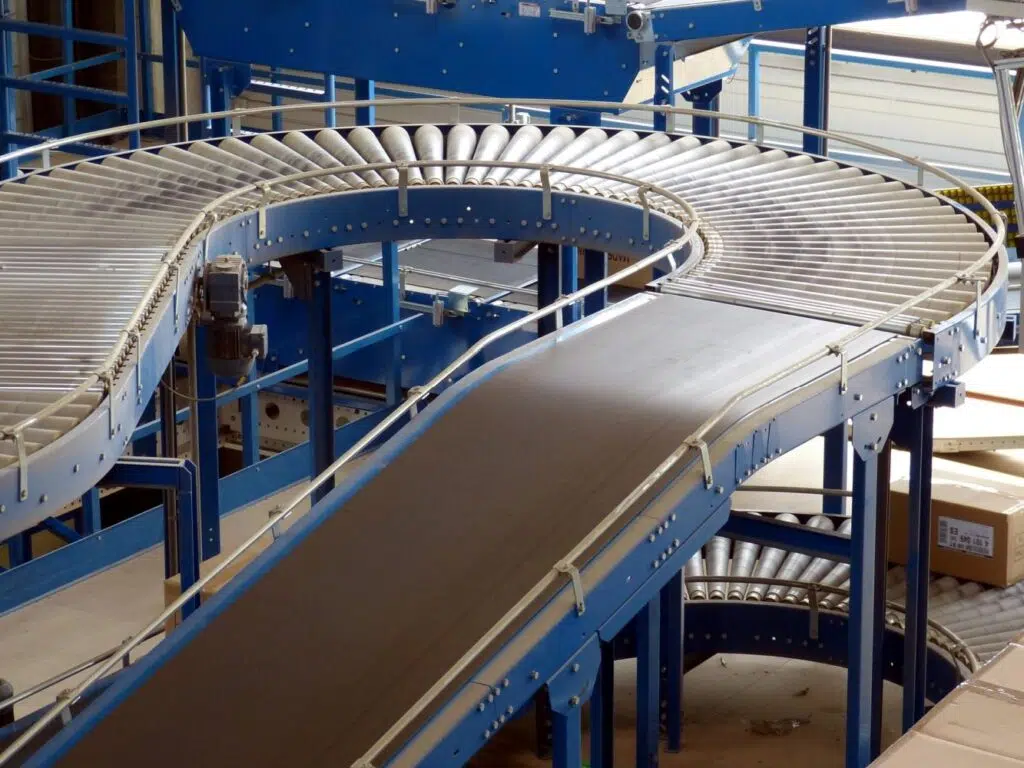
What are fabric conveyor belts?
Fabric conveyor belts are industrial conveyor systems that carry materials such as fabric and steel.
They are used in various industries, including manufacturing, construction, and distribution centers.
These systems make it easier to transport products to different locations.
Fabric conveyor belts also have an advantage over other types of conveyors because they are often easy to install and operate.
These belts are flexible, easy to replace or repair, and can empty themselves when needed. They also come in many different sizes so they can fit any application.
History of Industrial Conveyor Belts
Industrial conveyor belts have been around for decades, but they are still one of the most useful inventions of modern times.
They transfer materials within industrial facilities and between different locations with ease.
Conveyor belts allow factories to produce more efficiently in the same space by moving materials from one building to another without having to truck them around.
Conveyor belts were designed to move items along factory floors, taking up much less space than crates or carts.
Today, conveyors are also used in machine shops and assembly plants.
The long-time use of conveyor belts has led many users to assume that they are a reliable piece of equipment.
This is not the case as they can be damaged by improper use and worn out by heavy usage.
Why are fabric conveyor belts important in modern-day warehousing
There is a huge need for large warehouses in order to keep up with demand across the globe.
Conveyor belts are important in warehousing because they allow large quantities of goods to be transported and stored.
Industrial conveyors are used as an effective way to move products efficiently around buildings or general areas.
Conveyor belts that run through warehouses are often the primary point of contact for employees and customers.
These conveyor belts play an important role in modern day warehousing by moving boxes, products, etc. Conveyors also help to keep items organized and safe by always running in one direction.
The future of industrial conveyor belts is bright as warehouses continue to grow in size and complexity.
Types of industrial conveyor belts
Industrial conveyor belts have been used for decades to transport things like sand, aggregate, or other materials through a specific area.
They are mainly used in factories to move products and materials that must be processed with maximum speed. There are many different types of industrial conveyor belts each with its own purpose.
Some have heavy duty pads that prevent abrasion while others are made of flexible rubber material with steel wire teeth to grab the material. Industrial conveyor belts are used for a variety of purposes.
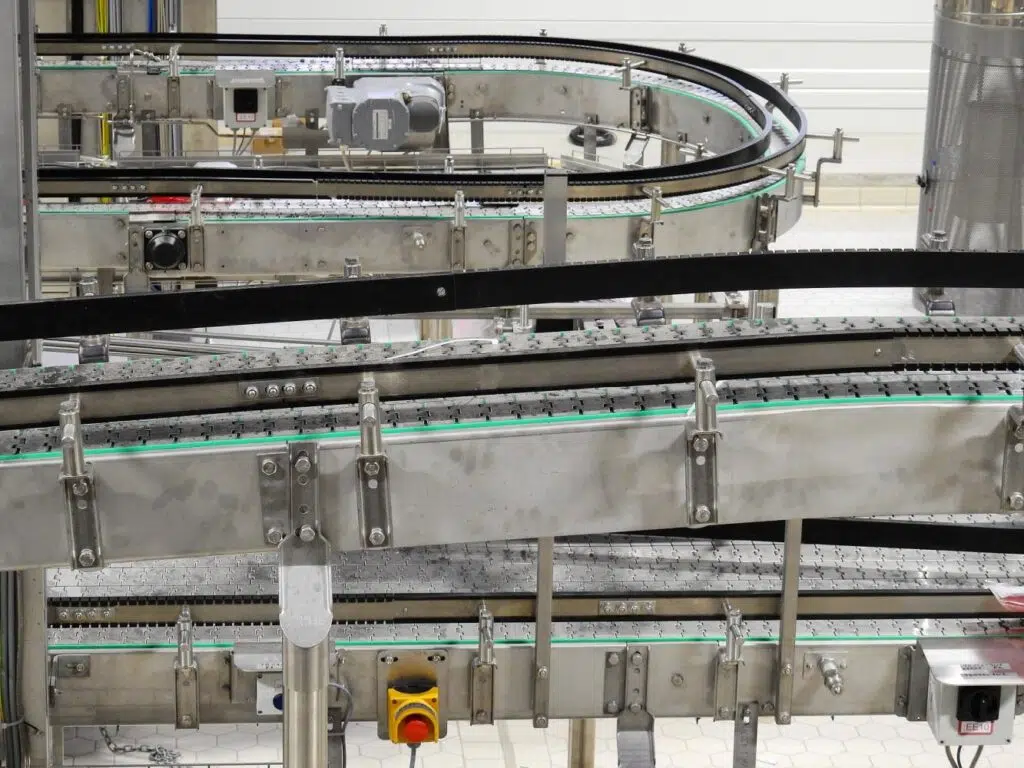
There are different types of industrial conveyor belts such as salt, roller, V-belt, and chain.
Their primary function is to move materials from one point to the next while they are in motion.
They can be found in factories and warehouses moving different objects such as material, food, raw goods, etc.

Modern day applications for industrial conveyor belts
Industrial conveyor belts are used as a means of transferring people and goods from one place to another.
The need for conveyor belts is not going away anytime soon and there are many applications for them in various industries today.
Conveyor belts can be found in manufacturing plants, warehouses, distribution centers, mines, and more. They are also beneficial for mass transit systems such as the subway.
The industrial conveyor belts of today are designed for one function.
The belt takes the material from one point and moves it to another. Industrial belts usually have a guide rail, which is placed at the front of the belt to guide the material through.
This means that no matter what shape or size it is, if it fits on the belt, it will probably go through this machine.
This can be seen as a limitation in modern day applications where conveyor belts are used for functions like packaging, boxing up goods for shipment, and picking up items individually.
An industrial conveyor belt is a type of moving parallel-plate, endless belt used for transportation, spanning across large distances.
There are many different variations of these belts like the one shown below that can vary in usage and applications.
Industrial conveyors are useful for transporting items that need to be taken in or out of an area or that require controlled movement.
Conclusion
The true future of industrial conveyor belts is in how they are manufactured.
With the ability to create new materials with the help of 3D printing, conveyor belts can now be made with more durability.
Though industrial conveyors are a vital component of factories, there is still room for improvement.