
Key Takeaways
- Digital workflows enhance precision and reduce treatment times in full-arch restorations.
- 3D printing technology enables the rapid production of customized dental prosthetics.
- Artificial intelligence (AI) is improving treatment planning and patient outcomes.
- Patient-centered innovations prioritize personalized care and aesthetic outcomes.


Table of Contents
- Digital Workflows Enhancing Precision
- 3D Printing Transforming Prosthetic Production
- AI in Treatment Planning
- Patient-Centered Innovations
- Conclusion
Cutting-edge dental innovations are rapidly transforming the landscape of full-arch restorations, offering patients hope for a long-lasting, confident smile. Digital tools, advanced materials, and personalized care protocols are all converging to create a new standard of excellence in dentistry. For those seeking comprehensive tooth replacement, the Full Mouth Dental Implants Dallas, TX, option represents a pivotal advancement, offering both functional and aesthetic solutions for patients with extensive dental needs.
Modern full-arch implant solutions surpass what was previously possible, leveraging digital technology for enhanced accuracy while significantly reducing treatment time. Today’s dental teams can employ digital scans, 3D modeling, and artificial intelligence to create natural-looking results. Whether you’re considering full-arch implants for yourself or guiding a loved one, understanding the latest trends and technology will help you make informed choices for long-term oral health and satisfaction.
Digital integration within dental practices has also streamlined communication and workflow, leading to fewer appointments and improved patient outcomes. Many patients experience a dramatic improvement in both comfort and confidence, thanks to these advanced treatment approaches. As the field evolves, practitioners can now collaborate in real time with dental labs and specialists, further enhancing the speed and precision of care.
For those seeking in-depth information on the evolution and benefits of dental implants, Mayo Clinic’s overview of dental implant surgery provides a detailed resource on what to expect and how full-arch solutions compare to traditional options.
Digital Workflows Enhancing Precision
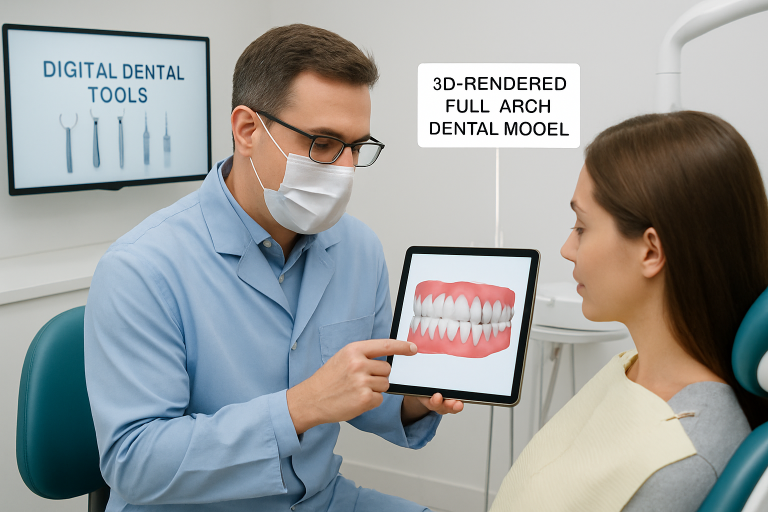
The rise of digital workflows has marked a turning point in the workflow, predictability, and precision of full-arch dental implants. Instead of relying on the traditional, often uncomfortable, putty impressions, dentists now turn to intraoral scanners. These devices produce highly accurate 3D digital models of the patient’s mouth, which are then utilized with advanced CAD/CAM systems for designing and creating restoration frameworks. This technology not only enhances the fit and comfort of the final prosthetics but also reduces the margin for error and accelerates the production process. Fewer manual steps mean fewer mistakes and a quicker process—results that directly benefit both practitioner and patient.
With digital records safely stored and easily shared, dental professionals can consult on complex cases and monitor the evolution of the arch over time. The integration of imaging and manufacturing ensures that each prosthesis is as unique as the individual receiving it, promoting long-term success and patient satisfaction.
3D Printing Transforming Prosthetic Production
3D printing stands at the forefront of rapid, fully customized dental prosthetic production. Unlike traditional fabrication techniques, 3D printing enables laboratories to create prosthetics built to each patient’s specific oral anatomy in a matter of hours. This not only enhances patient comfort and fit but also reduces material waste and overall treatment costs. The technology has gained enormous traction with the development of “All-on-X” solutions—implant-supported dentures that offer immediate function and aesthetics after surgery, with provisionals sometimes delivered on the same day.
The ability to iterate and refine prosthetics digitally means clinicians can deliver highly aesthetic, lifelike arches with consistent results. According to the American Dental Association’s commentary on dental implants, 3D printing is also making dental care more accessible, enabling the use of new materials and innovative approaches to full-arch rehabilitation.
AI in Treatment Planning
Artificial intelligence is ushering in a new era of accuracy and efficiency for full-arch dental implant planning. By leveraging large datasets of patient information, AI-driven systems can assist dental professionals in diagnosing, predicting outcomes, and creating precise surgical guides. This enables a broader range of treatment options, with optimized implant placement based on unique anatomical factors.
Machine learning algorithms help anticipate complications before they arise and suggest suitable materials and configurations for each patient. This reduces the likelihood of revisions or failures, resulting in higher satisfaction and better functional outcomes. As AI’s role grows, it will increasingly automate repetitive elements of the design and manufacturing process, further streamlining treatment timelines and expanding accessibility to advanced care.
Patient-Centered Innovations
Today’s dental patients desire more than functional results—they seek personalized, natural-looking smiles that reflect their individuality. Modern dental practices now adopt a patient-centered approach, using digital smile design to engage patients early in the treatment process. Through virtual mockups and 3D visualizations, individuals can preview their future smile and collaborate with their clinician to achieve optimal results.
This partnership between dentist and patient not only sets realistic expectations but also increases case acceptance and psychological comfort. Advances in material science, including new ceramics and polymers, have also contributed to a more life-like appearance and durability in the final prosthetics. Patients can now look forward to a restoration that feels and functions like their own teeth, with minimal adjustments or downtime.
Conclusion
The integration of digital workflows, 3D printing, artificial intelligence, and patient-centered design is revolutionizing full-arch dental solutions, establishing a new benchmark for precision, efficiency, and patient care. Digital workflows streamline every stage of treatment—from diagnosis and planning to the creation of customized prosthetics—reducing errors and treatment times. 3D printing enables highly accurate, durable restorations tailored to each patient’s unique anatomy, while artificial intelligence optimizes design and predicts outcomes for improved clinical success. Combined with patient-focused approaches, these innovations ensure treatments are not only safer and more predictable but also more comfortable and aesthetically pleasing. As technology continues to advance, patients benefit from faster procedures, enhanced reliability, and long-lasting results, ultimately fostering greater confidence and satisfaction with their smiles and overall oral health for years to come.