
Key Takeaways
- Prioritize safety and seek immediate medical attention, even for minor injuries.
- Thoroughly document the accident to provide crucial evidence for insurance or legal claims.
- Know the details of coverage provided by rideshare insurance policies.
- Get guidance from a legal professional familiar with Nevada’s rideshare accident laws.


Rideshare services like Uber and Lyft have made getting around Nevada much easier, but dealing with an accident involving these services presents unique challenges. Whether you are a driver, passenger, or another motorist, knowing the correct steps to take can be crucial for safeguarding your well-being and your legal rights. In the immediate aftermath of an accident, seeking medical attention and consulting a car accident lawyer in Las Vegas can make a significant difference in your recovery and ability to pursue compensation. Following the steps after a rideshare accident in Nevada can protect your health, strengthen your insurance claim, and ensure fair compensation, especially in complex liability and insurance considerations.
Immediate Actions Post-Accident
Your first priority at any accident scene is safety. Check yourself and others for injuries, and move to a safe location if possible. Call 911 to report the incident, even if it seems minor. Emergency responders should assess and document injuries, which also creates an official accident record that supports your insurance claim or lawsuit.
Some accident-related injuries, such as whiplash or concussions, may not present symptoms right away. Allow medical professionals to conduct a full evaluation at the scene or in an emergency room as soon as possible. This step also serves as vital documentation for future claims regarding the injuries you sustained in the accident.
Documenting the Scene
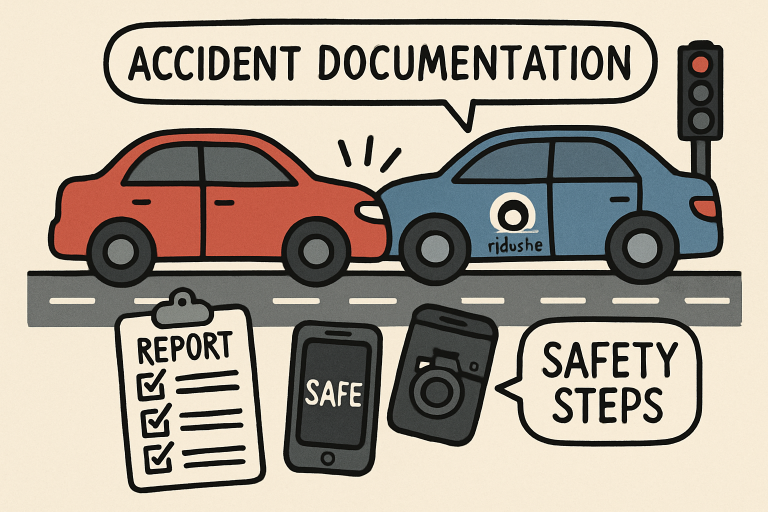
Collecting evidence immediately after a rideshare accident is critical. Use your phone to take clear photographs of the vehicle damage, the accident location, road conditions, and any visible injuries. Make note of traffic signals, skid marks, weather conditions, and anything else that could help reconstruct how the accident occurred. Gather contact information from everyone involved, including rideshare drivers, passengers, and independent witnesses. Write down license plate numbers, insurance details, and the make and model of all vehicles involved. If possible, obtain a copy of the police report for your records.
Reporting the Accident
Contact the rideshare company as soon as possible to report the accident. Both Uber and Lyft have dedicated app features and customer support protocols for handling crashes. Prompt notification to the platform ensures your incident is logged and may be vital if you need to access the company’s insurance coverage later. It’s also important to report the accident to your own auto insurance provider.
Understanding Insurance Coverage
Insurance coverage in rideshare accidents can be complex because it depends on the driver’s status at the time of the incident. When a driver is actively carrying a passenger or en route to pick one up, Uber and Lyft typically provide up to $1 million in liability coverage. However, if the driver is awaiting a ride request, the coverage may drop significantly, sometimes only covering a portion of the damages. For more on rideshare insurance policies and coverage limitations, see the National Association of Insurance Commissioners’ guide on ridesharing insurance.
Understanding the timeline and details of your accident is vital, as your ability to seek compensation will depend on whether the rideshare company or the driver’s personal insurance applies. Uninsured and underinsured motorist coverage may also play a role if damages exceed policy limits.
Legal Considerations
Rideshare accident claims involve determining liability among multiple parties, which may include the rideshare driver, the rideshare platform, other drivers, or even third parties such as vehicle manufacturers. Nevada follows a modified comparative negligence standard, so you can recover damages as long as you are less than 51% at fault for the accident. The amount you receive will be reduced by your percentage of fault, making it essential to document the scene and injuries comprehensively.
Consulting a legal expert experienced with both rideshare cases and Nevada’s personal injury laws will greatly improve your chances of recovering appropriate compensation. An attorney can help facilitate communication between insurance carriers, ensure your interests are protected, and represent you in negotiations or court proceedings if necessary.
Statute of Limitations
Nevada sets strict deadlines for filing personal injury claims. Victims generally have two years from the date of a rideshare accident to file a lawsuit. Missing this window could result in the loss of your right to seek compensation, no matter how strong your case may be. Start the claims process early to preserve crucial evidence and allow your legal representative adequate time to build your case.
Seeking Legal Assistance
The complex nature of rideshare accident claims means that having knowledgeable legal assistance is often invaluable. An experienced attorney can investigate the accident, negotiate with insurance companies, and help you receive the maximum compensation available for your injuries and losses. They will also educate you on the likely timeline and challenges of your case, empowering you to make informed decisions as you recover.
Conclusion
Being involved in a rideshare accident in Nevada requires clear thinking and decisive action. Prioritizing safety, thoroughly documenting the incident, and understanding your insurance options are key steps. Consulting a legal professional familiar with Nevada’s regulations can further ensure your interests are protected. By knowing what to do and who to contact, you’ll be better prepared to navigate the aftermath of a rideshare accident and protect both your health and your legal rights.