
Everyone wants a bite out of the Big Apple. In 2017, more than 62 million people visited New York City. Many of them went back home, but some of them stayed.
Moving to NYC opens a lot of doors for you. But you shouldn’t book your tickets to LaGuardia just yet.
How expensive is living in New York City? What should you do to find housing, student housing NYC, and secure a job for yourself? Once you’ve moved, how can you get acclimated to New York City culture?


Answer these questions and you can make an incredible life for yourself in New York City. Here is your comprehensive moving guide.
The Cost of Living in New York
The single biggest deterrent for moving to New York is the high living expenses. New York has an infamous reputation for being expensive, and that holds true in more ways than one.
The overall cost of living in New York is nearly two times higher than the national average.
New York housing expenses are almost three times more expensive than national expenses. Grocery, healthcare, and utilities are all more expensive than national rates, as well.
You should have a steady job that pays very well before relocating to New York. If you plan on changing jobs, you should have a confirmed job offer.
Your savings will run out very quickly, even if you live in a “more affordable” apartment or house.
Get advice on New York real estate before you commit to your move. Spend some time talking to realtors and try to secure a mortgage with a low-interest rate.
The Basics of New York City
If you are comfortable with the living expenses, you can then familiarize yourself with the basics of New York City.
New York contains more than eight million people, making it the biggest city in the United States.
The metropolitan area contains as many as 20 million people. This will create a culture clash if you come from a rural or less-populated region.
The city is divided into five boroughs. Manhattan is the most famous one, but Brooklyn has more residents and Queens is the largest by area.
The Bronx and Staten Island are also substantial in size and population.
Each borough contains a number of neighborhoods. SoHo, Chinatown, and Greenwich Village lie within Manhattan. Long Island is not a borough or a neighborhood, though it is adjacent to New York City.
In addition to natives, New York City sees tens of millions of tourists every year. They arrive year-round, so you should expect crowded streets and subway lines.
The city sees a number of movies and television shows produced inside of it, which can add to the crowds.
The city is one of the most diverse places on the planet. People from all over the world run businesses and establish families, keeping their cultures alive. You should be able to find something familiar somewhere in the boroughs.
New York City’s local government is very powerful. The office of the Mayor of New York City controls all public services and most agencies. The governor helps the mayor on certain projects, but the mayor takes charge of most things.

Weather Conditions
The city has relatively mild weather. The coldest month in 2021 has been February, which had an average temperature of 34.2 degrees. In 2020, the warmest month was July, which had an average of 80 degrees.
New York sees precipitation all year round. Each month may contain significant rain showers, some of which occur with minimal warning.
Many people moving to the Northeast are concerned about nor’easters or snowstorms. But New York City is experienced with handling large amounts of snow.
Storms that produce ten inches or less of snow cause few problems whatsoever. Each year may see one or two storms that drop a foot of snow, so nor’easters are rare.
Hurricanes and other natural disasters are also rare. Though Hurricane Sandy devastated New York in 2012, the city has rebuilt its storm-resiliency infrastructure. A future hurricane should pose less of a threat to the region, regardless of where you live.
It is possible that a Category 1 hurricane could cause damage to the city. Be mindful of the news and follow any developing storms closely. Comply with all evacuation or preparation orders from the mayor.
Find Housing
Your first step when planning your move to New York is to find a housing arrangement for yourself. This is difficult, and not just because of the high prices. Demand for an apartment is very high and you may need to compete with dozens of applicants.
Do some looking around to find an apartment that you want. Your preference may be to live in Manhattan, but you may only have options for another borough. Be willing to look at all five boroughs.
You may not be able to find any housing opportunities within New York City itself. But you can find an apartment in Newark or an adjoining city. Though they are more distant from New York attractions, New Jersey apartments are far more affordable with plenty of amenities.
Prepare your application process by having all of your financial documents on hand. You should also find a reference that can vouch for you, such as a former landlord or a realtor.
Buying a house is nearly impossible unless you have millions of dollars on hand. You should look for an apartment and then decide to buy another property. This lets you decide if New York City is right for you, and it gives you time to make a deal.
Get a Job
If you are looking to transition jobs, you can find plenty of opportunities within New York City. Many major corporations have their headquarters in the city, including automotive businesses like Cadillac.
The city is also home to a number of recruiters. If you have enough experience within your industry, you can work with one to find yourself a job.
Apply for a job as soon as you come across one you like. Never assume that you are going to get a position. You should apply to several different jobs at once, modifying your resume and cover letter to meet each one.
The New York City local government is a frequent hirer. Their departments have hundreds of positions, some of which are open to new arrivals. Visit the government’s website and prepare your application process.
Execute Your Move
When you’ve got your finances in order, you can start your move to New York City. Figure out when you need to be in your new home.
If you are moving from a house into an apartment, you will have less space to store your belongings. Bring all of your essentials, but sell your car and other bulky electronics. Most New Yorkers go without a car, and you may have things like a dishwasher in your apartment already.
You can drive into the city, especially if you are living in the Northeast. If a drive would be too much stress, hire a moving company and take a flight into New York. Both JFK and LaGuardia are located in Queens, so you need some arrangements to get to another borough.

Get Around
Your apartment will probably not be on the ground floor. You may have to deal with narrow corridors and sharp angles when moving your stuff. Break things down into individual components and take multiple trips when moving your things.
Feel free to ask for help. Despite their reputation, New Yorkers are willing to do favors, especially for newcomers. If you need some assistance getting your boxes into your apartment, ask a neighbor.
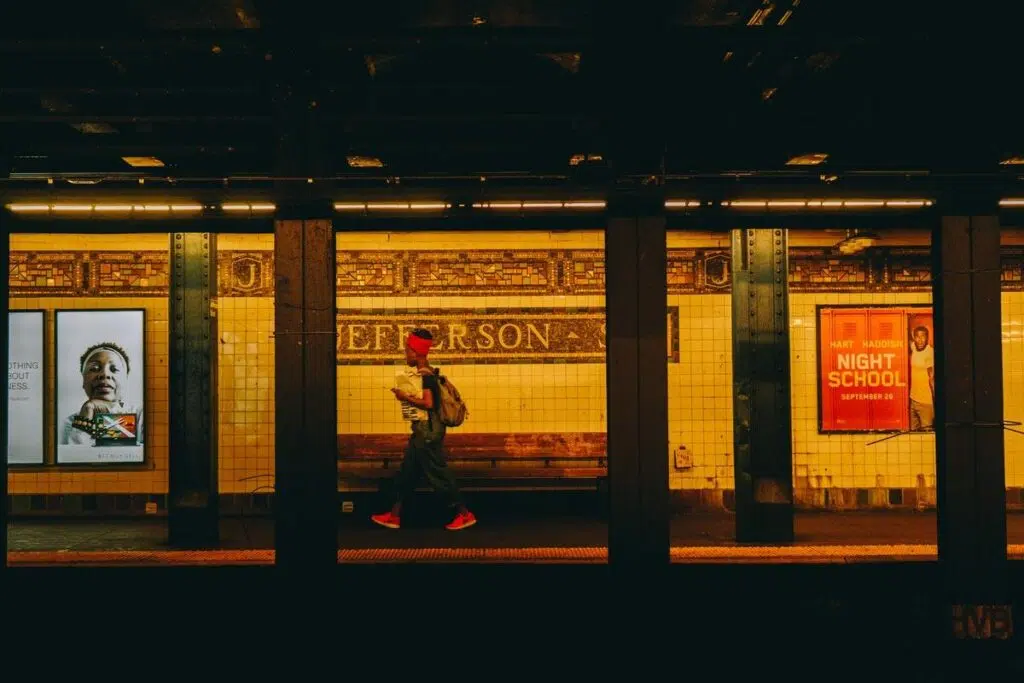
New York City has many different means of public transportation. The most famous means is the subway system, but it is not always ideal.
The system contains dozens of lines, and each line stops at dozens of locations. This makes any ride difficult and lengthy, and it is hard to switch between lines and get to a location on time. Service changes are a daily occurrence, so you should be mindful of cars breaking down on the line.
City buses serve areas that the subway does not reach. Buses are just as cheap as subways, and they can provide more space. Yet, service changes and other events can happen.
You can take a taxi cab from anywhere in the city to anywhere. But cab rides can get expensive, especially during rush hour or times of high congestion.
Walking is the most common way of getting from one location to another. New Yorkers are known for walking quickly, so you should prepare to pick up your typical walking pace. If you need to go a short distance walk instead of using the train or bus.
Whenever you are using public transportation, you should plan ahead. Give yourself plenty of time to get to your destination in case of a breakdown or service change.
Take in the Culture of NYC Living
Spend some time getting acclimated to New York. It is called “The City That Never Sleeps” for good reason, and its high energy may be hard to get used to.
Many new residents spend their initial days visiting tourist attractions like Rockefeller Center. You can do this, but you should expect significant crowds and lines.
Try finding out where you will go for a cup of coffee or a quick bite to eat. Bodegas are small convenience stores that offer prepared foods and limited grocery options. Many blocks have at least one, and you should stop by one near you as soon as possible.
You can also find a house of worship, public school, and museum near you. You may have multiple options for where you will attend church services or send your child, so do some research.
Making friends in New York City can be difficult. The city is so large and kinetic that it is hard to get to know people.
Try to get on good terms with everyone in your office and become a member of different organizations. You can find many places where you can pursue your hobbies, especially in the arts.


Stay Safe
New York City is a relatively safe city, but you can follow some crime prevention tips to maximize your safety. Limit the number of valuables you carry with you, and put them in places where they will not get stolen. Put your wallet in your front pocket and keep a necklace underneath your shirt.
Pickpocketing often occurs on subway lines. Move quickly through the turnstiles and keep away from others on a crowded train. Look at the people around you in the eye so you deter potential thieves.
Do not walk through any dark areas, including public locations like parks. If you must take a shortcut, walk fast, and head straight to your destination. Take your keys out so you can get into your apartment in very little time.
New York remains an epicenter of the COVID-19 pandemic. Receive a vaccine and wear a mask whenever you are near a group of people you don’t know. Follow the news because regulations may change, especially for indoor seating at restaurants.
The Essentials of Moving to NYC
Moving to NYC is a process you can start right now. You are going to need a lot of money to cover all essentials.
But if you’re comfortable with all of that, you can find plenty of housing and job opportunities. Get into the city as soon as possible so you can start your life.
Shop at a bodega and find the other amenities you will need. Adopt some common-sense safety measures so you can avoid crime.
You can move to your favorite city once you know what moving is about. Follow our coverage for more moving guides.