
You have surely heard about the syringes and needles whenever you have visited the pharmacy or from many doctors.
Needles are made of stainless steel or carbon steel, and syringes are made of glass or plastic. It is a beneficial tool in the medical field and for many types of research laboratories.
There are thicker as well as thinner needles that are used according to the prescription.
Syringes and needles are medical devices used to inject the fluid in the body, and it is also used in the withdrawal of blood for pathology check-ups.
Most syringes are made up of plastic because they are a one-time using tool.
Syringes and needles are attached, and there is a sliding plunger, and with the help of this plunger, the blood is injected and withdrawn.

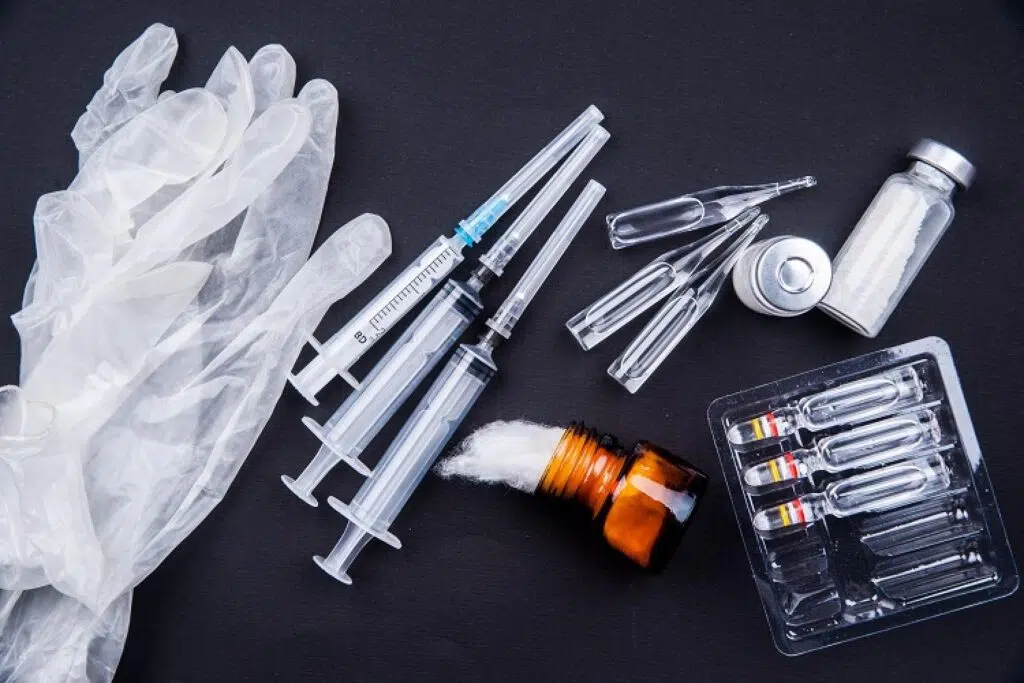
Its downward movement injects fluid into the body, and its upward trend withdraws the blood and other fluid from outside the body.
Other than medical science, various syringes and needles also play a significant role in the many research laboratories and biotechnological laboratories.
Different Parts of a Syringe and Needles and Their Use
These are some of the significant features that exist in a needle or syringe.
- Hub: This is the end part of the needle through which the syringes are attached.
- Shaft: This is the middle part of the needle, also known as a long slender stem, that finally forms a point in the front end. The shaft is also known as a cannula.
- Bevel: This is one of the diagonal parts of a needle.
- The Plunger: This is a part of its range, and its direction of movement injects and withdraws the fluid into the body or from outside the body. It is hollow from the inside, and a vacuum is created in it.
- Cap: it is used to protecting the needle. It comes in a different size based on the size of the needle.
- Barrel: This is the outer part of the syringe in which the measurement scale is given, and medication is given by measuring the fluid from it.
- The Needle: This is the top end that is used to inject and withdrawal the fluid.
Different Types of Syringes And Their Uses
Insulin Syringes: This is a commonly used syringe, and you can use it only once. They are cost-effective and are in great demand to inject insulin.
Poison Extraction Syringes: These types of needles are used to extract the poison with the help of a vacuum from the wound without puncturing it.
Tuberculin Syringe: These syringes can hold only 1 ml of liquid because they are smaller than other syringes. It is used for purposes such as tuberculosis tests, intradermal injection.
Dental Syringes: These types are for gums to make the anesthetic. It is also used in cleaning debris through air, water, and mist.
Eccentric Tips Syringes: These syringes are used to inject the fluid parallel to the skin without penetration through vascular walls.
The Luer lock: In this type of syringes, we can easily reattach the needle and remove it whenever needed.
Selecting Syringes and Needles
Select the syringe based upon the volume of medication prescribed. Syringe used for injections, with medical tubing or for irrigation are also factors in syringe selection. Needles have a simple design with a hollow center, sharp point, and a hub that affixes to the syringe. Needle shafts has varying lengths that measured in inches. For selecting the right needle, It has three primary considerations which are gauge, length, and use.
The Conclusion:
Syringes are also used in the measuring of fluid, injecting drugs, etc. Syringes and needles are an integral component of overall the medication process.
They are a small medical device, but it is widely used and which we cannot imagine the faculty of medicine.
There are certain precautions that the user of syringes and needles should keep in mind, like disposing of the needles and syringes after using them.
There are also different brands of needles and syringes, and when you are buying one, then it must be of the best quality, and at the same time, you must know the right way to dispose of it.
*************************
Author – Bio:

I am Kiara Waylen, A Knowledgeable and Qualified Blogger based on Australia. I love to write about on lot more general categories with useful information which help to get more ideas.