
The benefits of yoga are manifold.
Those who don’t struggle with physical aches and pains may find that it helps soothe their mind.
Meanwhile, those who work physically demanding jobs may rely on yoga to condition the body while also calming the mind.
Whatever the reason for seeking out yoga practice, there’s likely a perfect stretch or pose.
Depending on a practitioner’s goals, these could range from help sleeping at night, recuperating the body, or clearing the mind.
The proof of yoga’s efficacy is in the data behind yoga classes and attendees.
According to Google data collected by Finder, there are over 10,000 yoga teachers in the UK that host the 20,000-30,000 yoga classes taught each week.
But even more, enthusiasts are spearheading their own journey into yoga by taking free courses at home.

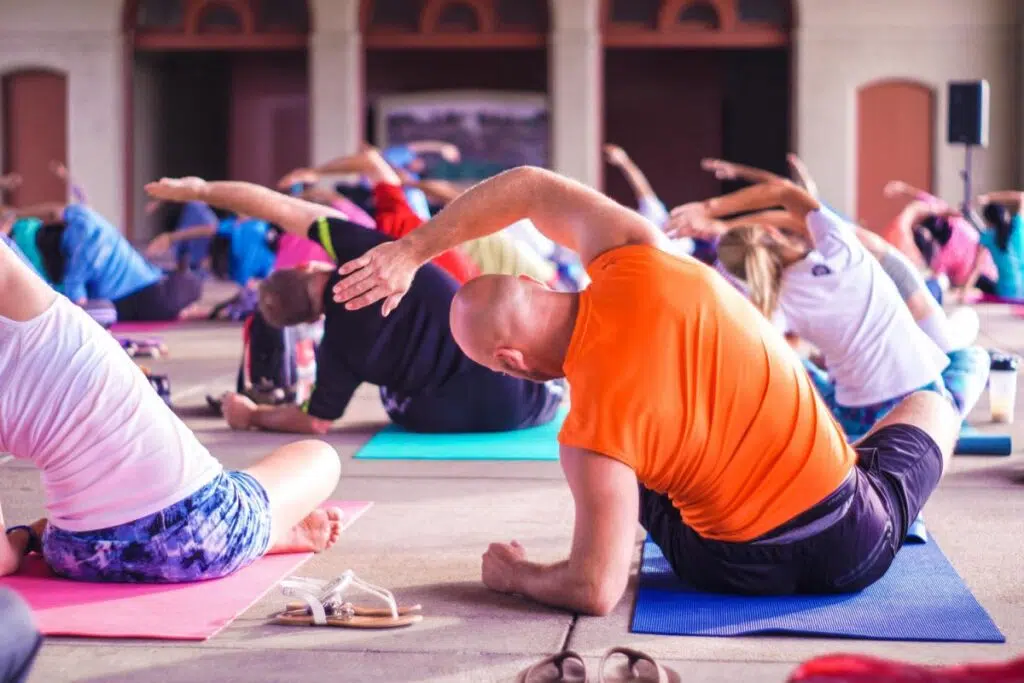
In this scenario, there aren’t yoga classes, but yoga tools that workers can adapt to their own lifestyles and schedules.
Let’s take a look at five applications of yoga moves that everyone can use.
All-Day Sitters
Most in the workforce work standard nine to five schedules.
This often translates to hours of sitting at a desk — but even professionals with unique jobs often find themselves stationary for long stretches of time.
People in these scenarios will find quick yoga breaks and invigorate the mind and body.
For example, poker pros who stay seated for hours at a time are offered only five-minute breaks each hour during live tournaments.
This has led to ‘poker yoga’, in which each pro has a secret pose for better spinal health and mobility during long stretches of play.
These included the seated twist and crossing the arms behind the back.
Both can be done while seated, and help stretch the lower back, hamstrings, and shoulders.
All-Day Standers
Though most modern workers will find themselves sitting quite a bit, others will stand for most of their workday.
This covers a range of professions, from surgeons who might be on their feet for most of their 16-hour shift, to servers at a restaurant who will spend the better half of their shift hustling around.
Given the physical stressors of standing, these yoga poses are00000 a bit more unique — and are a bit harder to do in the workplace without a private office.
The static back stretch requires a chair, while the hand-to-foot pose requires a band. Both will target the hamstrings while helping realign the hips and spine.
Strenuous Labor
Surgeons and servers may be standing all day, but they’re not laying concrete or hammering nails.
For workers who put in similar hours of strenuous labor, yoga can be incredibly helpful in preventing injury in addition to conditioning the body.
With enough labor at work, these poses are designed to relax the body, nurture muscles, and tendons, and promote spinal alignment.
Even better, most poses can be done while lying flat on the back. These include leg stretches, hip thrusters, and child’s pose.
Those working demanding physical jobs can also rely on meditative poses.
Though these won’t have tangible effects on the body, they can help professionals relax internally after stressful days.
The most basic meditative postures are sitting on the floor cross-legged, folding the hands in the lap or placing them on the knees.

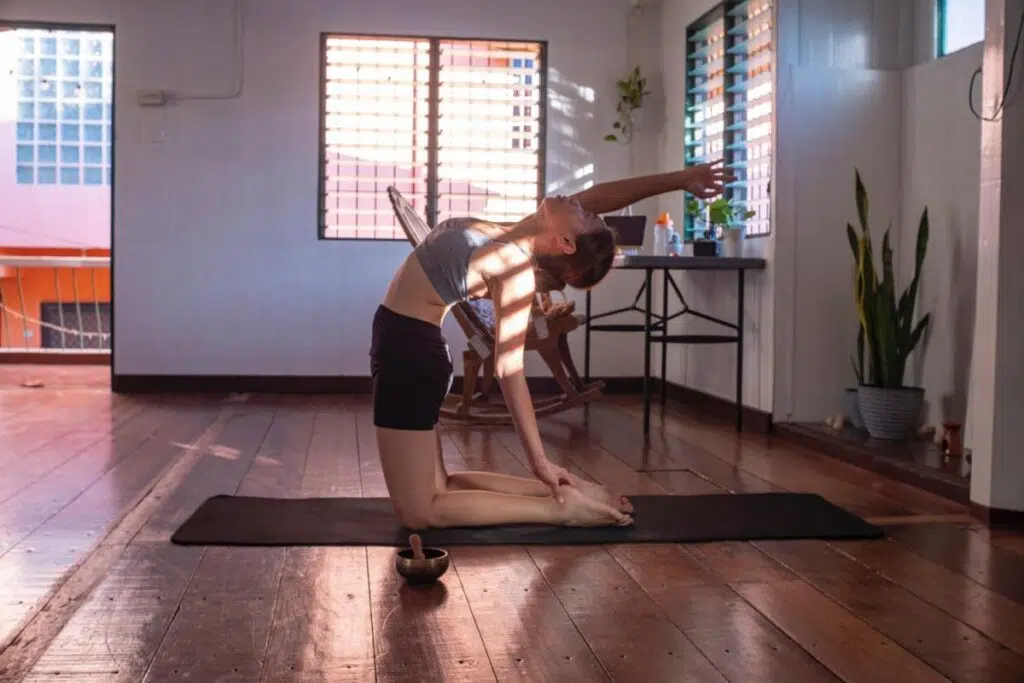
Inconsistent Sleep Schedules
Whether working the graveyard shift or suffering from a bout of sleeplessness, those with suboptimal sleeping schedules can benefit greatly from incorporating yoga into their daily routine.
Similar to poses for laborers, these are designed with relaxation and recuperation in mind, helping streamline internal systems like the endocrine system, eating habits, and posture.
The bow pose and child’s pose will help relieve stress and improve circulation, while also targeting the back and spinal cord.
The triangle pose will also help target backaches for those in need.
One of the most important poses is the mountain pose, which will improve respiratory and digestive systems.
One tool that inconsistent sleepers can rely on is ‘abdominal pranayama’, which means deep breathing with the diaphragm.
Taking full breathes through the stomach helps reduce fatigue, and can be used after a night of restlessness.