
When our little ones are young, it’s common to use music and movement as part of their early learning.
Just think of those catchy jingles on every childhood program!
It’s natural for younger family members to be drawn to creative outlets like music, but what happens if it turns out you’ve actually brought a budding young musician to life?
If you’re musical yourself, how do you share that love with your children?
Today we look at how creativity through music can help build a happy, creative family.


Active Listening and Cultivating Creativity
Active listening is the idea of engaged, focused consumption of what we hear, rather than just ‘hearing’ it in the background of our lives.
Music, particularly, is often an emotional outlet that brings memories and ideas to the surface.
You’ll often notice that musically-inclined children are drawn not just to actual music, but also to how things sound, from crickets to raindrops.
It’s sometimes tough as a parent to connect with these ‘childish’ ideas, but don’t be the one squashing your child’s emerging creativity.
Remember, even if the interest falls away later in life, you’re setting them up as engaged listeners, critical thinkers, and creative beings, and those are life skills that will serve them well.
If you’re a musical family, or you just notice that your young one is drawn to music as a creative outlet, don’t be afraid to broaden those tastes.
Top 40 pop songs, jingles, and TV soundtracks are well and good, but they’re not going to develop much musicality.
Don’t be afraid to introduce even young children to more complex music, from classical through to jazz, rock, and (small-ear appropriate) metal.
Even Putumayo World Music Label, that specializes in folk, Latin American, and Afro-Cuban music, has a child-friendly collection of kids music from around the world to explore.
Encourage them in their musical pursuits. Get them thinking about what they’re hearing and why they connect with it.
The more you share interests with them, the more engaged you are as a family, so don’t be shy to connect with a musical child through music even if you have a tin ear yourself.
Chill Out
Every parent has faced the moment where they can’t listen to one more round of ‘Baby Shark’ without putting a fist through the window, but sorry, moms and dads… repetition is part of how younger children learn.
We won’t blame you if you start googling great noise-canceling headphones, but you can also do a lot to ‘zen’ your mindset around repetition by understanding why it appeals to your child.
They’re learning to distinguish sound, rhythm, and pattern.
You’re old enough to take your ears for granted, but they’re still exploring the world!
Likewise, encourage your child to sing and express themselves through music.
It’s good for all children, musically inclined or not, to learn that you don’t have to sound like a perfectly mastered album to do something you enjoy.
If you play an instrument of your own, let your child interact with you and your own musicality.
Let them see the practice it takes to get good at something, and how interesting it can be to have a musical skill.
It’s also good to start teaching them manners and behavior around things that are important to others, like your instrument.
Of course, be sure to pack things away securely from little fingers! Who knows, your budding music star may even encourage you to chase your dreams again.
Let your Child Explore freely
Having a musically talented child is wonderful, but don’t let that turn you into a Tiger Mom (or Dad).
Many children have diverse talents, but that doesn’t mean you need to push everything they can do on them at once.
Take signing your child up for music lessons.
For some children, that’s the dream- but for others, it could be the means of squashing it by pushing too fast and hard.

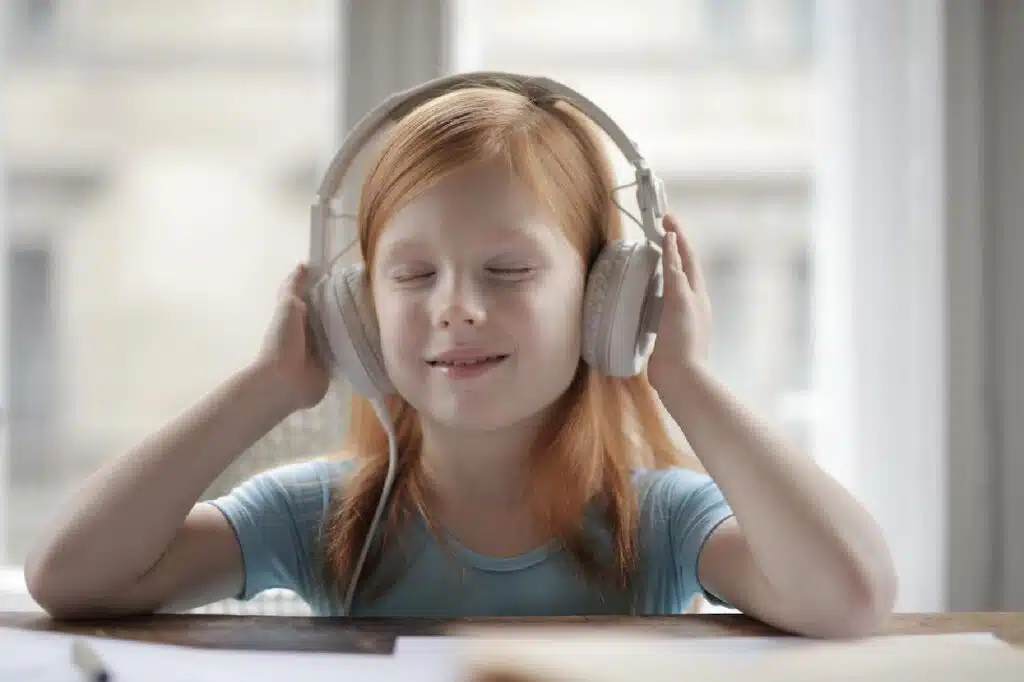
Learn to let your child guide you, instead of forcing them to take everything they’re good at to the max immediately.
Having musical instruments around can help kids develop their musical talent.
If they try different hand percussion instruments, recorders or Ukuleles, they might find one that they like and want to learn more about.
There are many ways to help children develop their musical talent.
Some children might want to sign up for music lessons, while others might just enjoy having musical instruments around the house to play with. Let your child’s interests guide you in helping them develop their musical talent.
Educators and psychologists are already noting that ‘hustle culture’- the need to perfect, and then monetize, our hobbies is causing an epidemic of squashed creativity.
People get fearful of trying to express themselves creatively because they believe they not only have to do it the best, but also in a profitable way, or it’s ‘useless’ and ‘worthless’.
How many hobbies of your own have you put down because you ‘aren’t good enough’?
Creativity is an important part of the human psyche, and having creative hobbies and outlets is deeply important to building a healthy, happy relationship with the world.
Learning to balance the right amount of encouragement to overcome a little laziness, support to overcome demotivation, and encouragement to reach for their best with the inevitability of failure and imperfection is an important part of becoming a great parent.
You will make mistakes, of course, but ensure that you don’t make the biggest one of all, burning out your child’s passions by being too demanding of perfection.
Make sure home is a safe environment for them to express themselves, not another place of judgment.
Maybe your older child or teen will go through a phase where they aren’t into the musical passion they once loved.
That’s fine. Possibly encourage them towards (safe) sites where they can connect with other musicians who share that passion.
Support them if they’ve failed in a milestone they hoped to achieve. And let them know it’s ok to walk away from things for a while.
They’ll always be waiting for them to take them back up if they want to.
Encouraging a creative, talented child without pushing them too hard is an exercise in mindful parenting, too.
But it’s also one of the most important things you’ll ever do!