
It’s safe to say we all want to be doctors when we grow up. Until then, though, we need to act like doctors.
If you have a little one and want to practice your pediatric skills, we’ve got you covered.
While the method of delivering first aid to a child depends entirely on the child’s age, there are certain things we can say to give you a general idea of what to do.
Check out this child CPR hand placement guide to take control of your in-home caregiving. Each one of these procedures could help lead to the difference between life and death. Read along to learn more!
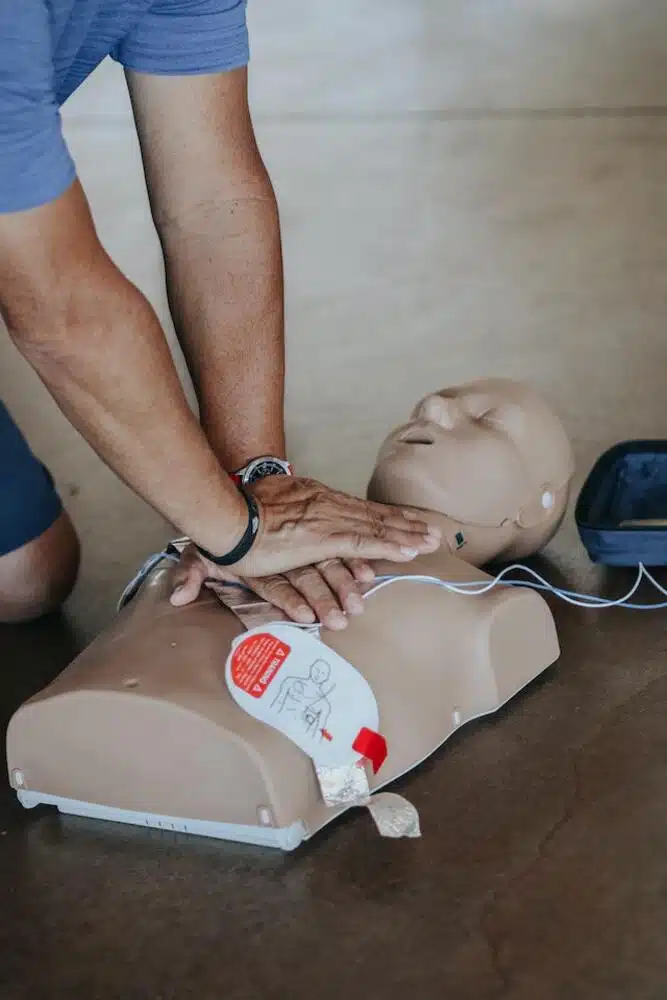
Place the Heel of the Hand in the Center of the Chest
To do so, place the heel of one hand in the center of the chest, slightly above the nipple line.
Using the other hand, place it in the center of the infant’s chest and wrap the fingers of the first hand around the second hand. Lock the fingers together and create a seal with the hands over the chest.
Make sure the heel of the hands is placed firmly on the chest, just above the nipple line, and press down with equal force to ensure proper compression.
With these tips in mind, healthcare providers should be able to correctly place the heel of the hand in the center of the chest for child CPR.
Lock the Elbows While Providing Compression and Keep a Straight Back
Keeping a straight back with locked elbows is important to ensure the child receives proper chest compressions.
The back should be kept straight with a bit of a gentle arch. It is important to maintain this posture throughout the entire chest compression process.
Lock the elbows by bending them slightly and bringing the arms parallel to one’s body.
This will keep the compression depth consistent. When compressing, press the heel of the hand with both the fingers and palm together, and make sure to keep the elbows locked while providing the chest compressions.
Lock elbows, maintain a straight back, and apply even pressure with the heel of the hand. This will allow for the chest compressions every child needs during a cardiac arrest.
Allow the Chest to Fully Recoil After Every Compression
To do this, place the heel of your dominant hand in the center of the child’s chest, on the same side of the sternum as the other hand.
Your other hand should be placed on top of the first and interlocked with your fingertips. Use your body weight to compress the chest between 2 and 2.4″ (5-6 cm).
Allow the chest to recoil fully after each compression by slightly leaning back. Ensure you are not pushing the sternum too far up or too far back.
Maintaining a ratio of 30 compressions to 2 breaths during the cycle is also important.
Visit MyCPR NOW to obtain your CPR certification, enabling you to confidently perform and learn CPR.
Learn About the Child CPR Hand Placement Today
Having this knowledge will help healthcare providers save a life in the event of an emergency. Therefore, it is important to always remember the correct child CPR hand placement.
It is always recommended that all healthcare providers include child CPR in their training to ensure everyone has the knowledge to save a life. Get trained now!
If you find this helpful and want to read more great content, check out our latest blog posts now!