
Solar works in different ways – sunlight isn’t the only source that can create electricity. Sun’s heat is also a source to generate thermal power.
A flat plate collector is a device that facilitates this process of utilizing heat from sunlight.
Wondering whether or not the concept of using heat is just as practical as using light to generate electricity?
If that’s been keeping your mind busy, this guide is just the right fit for you.
Dive in and understand the working of a flat plate collector, the applications, benefits, limitations, and more.

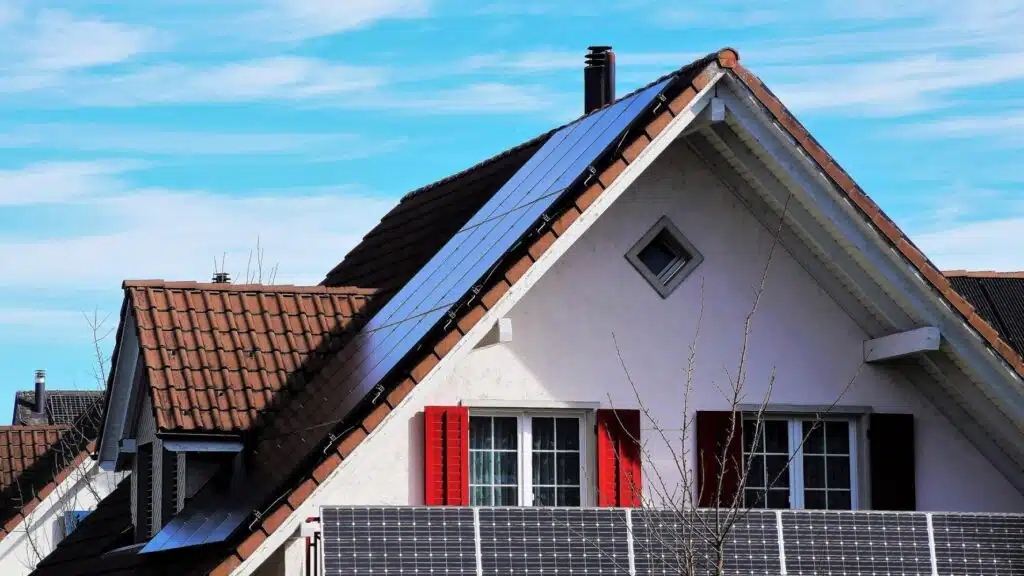
What is a flat plate collector? What are its components?
A flat plate collector is a solar device that absorbs heat from the sun and uses that heat to create thermal energy.
That thermal energy is further used for various household and commercial purposes (to be discussed a little later in this guide).
The device in itself is a basic structure: a metal box (usually made of either copper or aluminum which are both very good conductors of heat) that’s fitted with an absorber plate.
It’s the job of this absorber plate to absorb heat from the sun.
In order to increase this heat-absorbing capacity, sometimes, a special coating is used to paint the plate instead of a black paint.
So, here’s a breakdown of the components:
- An absorber plate
- Tubes that are used to propel air or water, whatever is being used to transfer heat
- A glazing cover at the back side of the plate in order to minimize heat loss
- A container that holds every element in place
How does a flat plate collector work?
Now that you know what a flat plate collector is and what its components are, it shouldn’t be very hard to comprehend how it works. We have simplified the procedure for you step by step:
- Sunlight hits the metal box’s surface.
- The box’s surface channels that light to focus directly on the coating of the absorber plate.
- The absorber plate collects heat.
- That heat raises the temperature of air or water that’s being used as a medium to deliver heat from point A to point B.
What are the different types of a flat plate collector?
The types are classified according to two factors: glazing and configuration. Let’s find out what they are.
According to glazing, there are two types: glazed and unglazed.
Here are the differences between the two:
| Glazed flat plate collectors | Unglazed flat plate collectors |
| They have an insulation coating that blocks infrared rays | They do not have any coating |
| The temperature of these collectors can go up to 100 degrees C | The temperature of these collectors goes up to 30 degrees C |
| They’re slightly expensive but far more efficient than unglazed ones | They’re cheaper but a lot less efficient |
According to configuration, there are two types: parallel and series.
Here are the differences between the two:
| Parallel configuration FPC | Series configuration FPC |
| The heat can be dispersed in larger volumes of water or air | It cannot properly heat very large volumes of water |
| This flat plate collector (FPC) can be used for commercial purposes too | It’s better to use this one for smaller residential purposes |
What are the benefits of using a flat plate collector?
The most noteworthy benefits of having a flat plate collector at home or commercial establishments are as follows:
- Since an FPC uses heat from the sun, it’s a non-polluting source of energy generation.
- It’s not an expensive model. In fact, the maintenance isn’t hefty either.
- These devices have a very long life. They’re quite durable.
- The collector/absorber plate is resistant to corrosion.
What are the applications of a flat plate collector?
There are many. We have listed each of those applications in the pointers below. Have a look:
- They’re used for heating large water bodies such as swimming pools and water storage tanks.
- They can be used for space heating and drying purposes too.

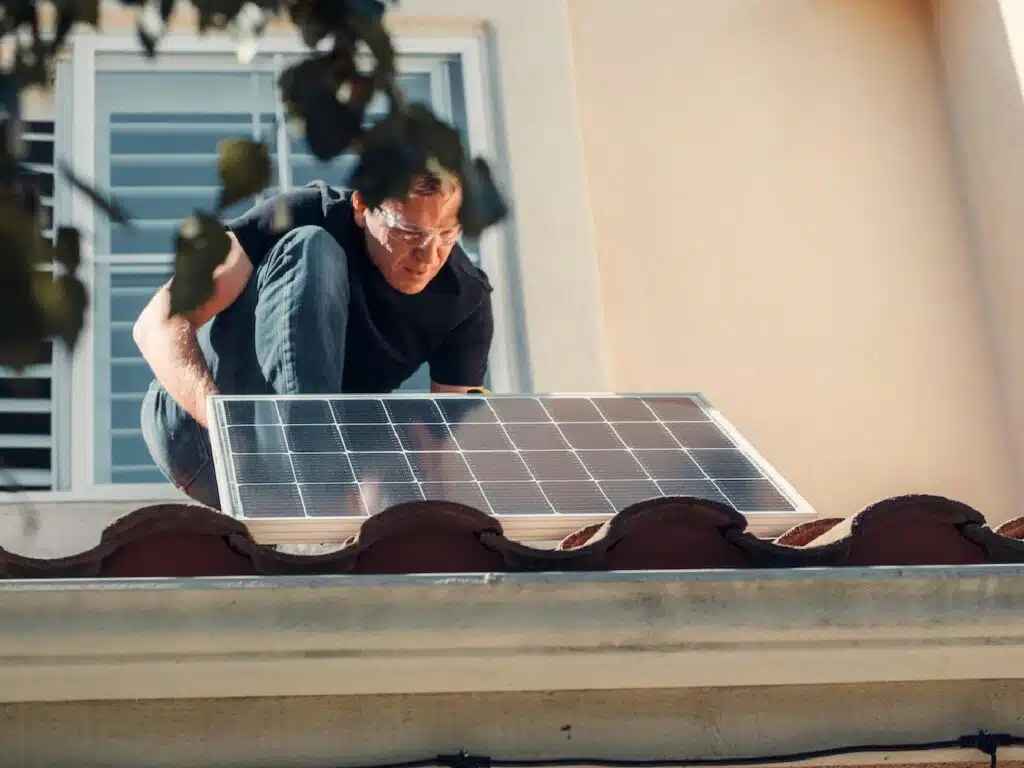
What are the limitations of using FPCs?
Flat plate collectors are extremely practical models to heat water bodies and even a room, but they have their own set of limitations. Let’s decode those limitations:
- Their efficiency goes down drastically when the temperature is too low.
- Harsh winds can disorient the mounting angle of FPCs; thereby, affecting their efficiency again
Despite these few limitations, FPCs are quite popular because they’re affordable, economical solutions in comparison to using electricity from the grid to heat water or a room. Besides, they do not emit carbon. So, they’re not a source of global warming.
Solar panels or flat plate collector: which one’s better?
Hands down, solar panels are a better investment. Why? For many reasons, such as:
- They use sunlight to generate electricity, not heat. So, whether it’s cloudy or raining, they will generate power.
- They’re not just long-lasting, they’re super resilient to harsh weather conditions as well. When you buy tier-1 modules, they last for a minimum of 25 years. After that, their efficiency drops down but they still work at a 70% efficiency rate.
- They’re designed to handle cyclonic wind speeds.
- Installing solar panels at home can reduce your electricity bill by up to 90%.
However, they’re more expensive than flat plate collectors. There’s certainly an upfront investment, but these systems are absolutely worth it. However, that’s a discussion for some other day.
For today, our verdict is that having flat plate collectors is a very good investment in itself.
However, if you can afford a glazed and parallel configuration FPC over the unglazed one, go for it. It’s a more value-for-money option.
Conclusion:
A flat plate collector uses heat from the sun to produce thermal energy.
It’s an excellent way to heat water bodies and rooms. Since the heat from the sun is non-polluting and infinite, FPCs are certainly the future.
Investing in one will reduce your utility bills to a large extent.
Whether you’re installing one for personal use or you’re a commercial establishment, as long as the tilt and mounting angle of the absorbing plate is correct, your FPC will be able to utilize the irradiation to its full potential.