
Eminent domain refers to the power of the government to take private property for public use. While fair compensation is required, many people see this as a controversial topic. After all, people have had their property taken/sold even if they didn’t really want to do it. There have been several fairly controversial instances where the government used eminent domain to get what it wanted. Here are seven of them.
1. Kelo v. City of New London (2005)


Arguably the most famous modern case of eminent domain, Kelo v. City of New London reached the U.S. Supreme Court and forever altered public perception of property rights. This case involved the seizing of private homes in New London, Connecticut. The homes were given to a private developer as a part of an economic revitalization plan. Homeowners, led by Susette Kelo, argued that transferring their property to private entities violated the Fifth Amendment. Unfortunately, the Supreme Court disagreed and ruled 5-4 that economic development could be considered “public use” under eminent domain laws. Ultimately, the development project fell through, leaving the land undeveloped, which was heartbreaking for individuals who lost their homes.
2. Poletown Neighborhood in Detroit (1981)


The Poletown case stands as one of the most poignant examples of eminent domain gone wrong. The city of Detroit was facing some hard times in 1981 when they gave the okay for an entire neighborhood to be taken to make way for a General Motors assembly plant. Thousands of people were displaced when nearly 1,400 homes, businesses, and churches were torn down. There were some jobs created, but the economic boom that was expected never happened. In the end, the Michigan Supreme Court overturned the Poletown decision in 2004. They ruled that taking private property for private gain was unconstitutional in the state.
3. The Atlantic Yards Project in Brooklyn (2006)


In 2006, the state of New York used eminent domain to acquire land for the Atlantic Yards project, a large-scale redevelopment in Brooklyn that included the construction of the Barclays Center, home to the Brooklyn Nets. Hundreds of people were displaced as a result of this project. Developers made a solid argument for revitalizing the area and creating jobs, but in actuality, the real motive was profit. Unfortunately, the courts sided with the developers, and the project moved forward, To this day, it has continued to be a symbol of the tensions between public benefit and private gain in urban development.
4. The Dakota Access Pipeline (2016)


The Dakota Access Pipeline, a highly controversial project stretching across four U.S. states, raised significant issues around eminent domain. This project was more recent, but it was extremely controversial. Many people argue that it benefits private oil companies more than it would benefit the public, which is supposed to be an important part of eminent domain. In some cases, landowners were forced to sell their property. What really made many people oppose this project was that the Standing Rock Sioux Tribe objected to the pipeline’s proximity to their reservation, citing concerns about water contamination and sacred land. Despite this, the project was completed, but it has remained a controversial topic.
5. The Trump Border Wall (2017-2020)

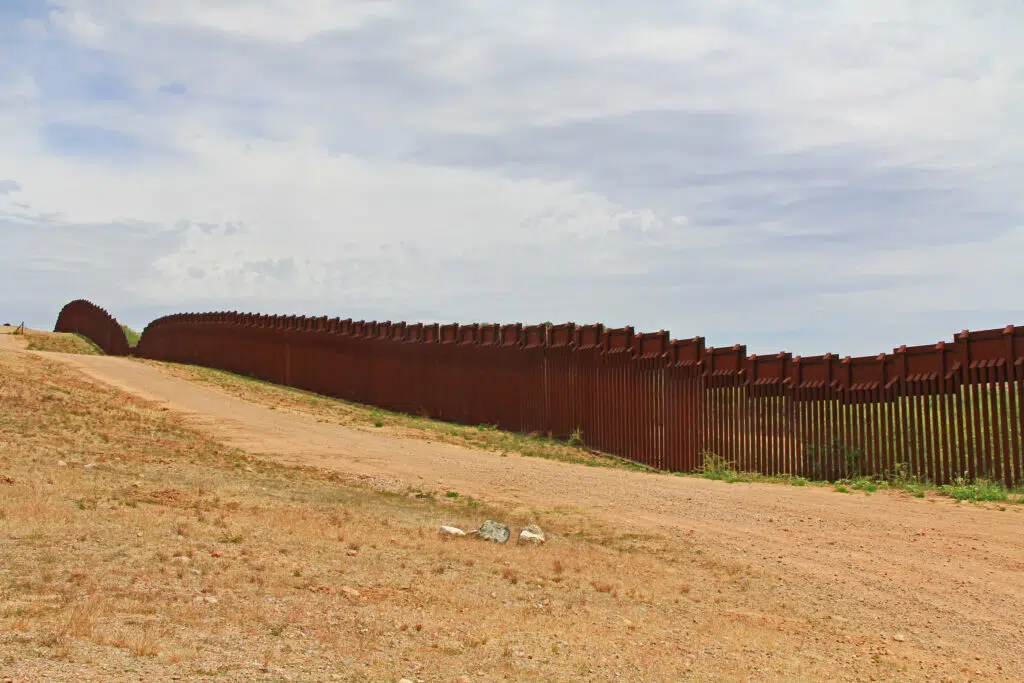
Trump’s infamous border wall brought eminent domain back into the national spotlight in 2017. Many landowners were forced to surrender their property for wall construction. The justification behind this was that the border wall would improve national security. However, many people argued that the wall was not going to be effective in keeping immigrants out. Some landowners were able to win temporary victories, but the use of eminent domain to build the border wall is still one of the most polarizing things that occurred during the Trump presidency.
6. National City, California, and the Affordable Housing Battle (2007)


National City, California targeted a low-income neighborhood for redevelopment. The government wanted to use the land to build upscale housing, displacing a number of people who had lived there for decades. The city claimed that the neighborhood was “blighted,” but people who lived there argued that this was just something they said to push out the lower-income citizens. This use of eminent domain in National City reflects broader concerns about gentrification, displacement, and the rights of marginalized communities.
7. Arlington, Texas, and the Dallas Cowboys Stadium (2004)


In 2004, the city of Arlington, Texas, used eminent domain to acquire land for the construction of the Dallas Cowboys’ new football stadium. Hundreds of homeowners and businesses were displaced. Critics of the project questioned if a privately-owned sports team like the Dallas Cowboys should benefit from the seizure of private property. This case is often used as an example of eminent domain not being used for the greater good, but rather for a luxury project.
Eminent Domain is a Powerful Tool


Eminent domain is a powerful tool that the government has (and will) tap into when it wants to. These seven cases highlight some of the issues that can arise with the use of the power of eminent domain. The lines can blur between public benefit and private profit, which has made this government power a controversial topic over the years. As cities continue to grow, it is likely going to be an ongoing topic of concern.