
Photography is an area which seems to trigger intrigue and has become increasingly popular in recent years.
The lowering cost of technology, the massive boom in picture-based social media channels, the fact that you can have a decent camera on your person at all times thanks to your smartphone app – all these conspire to make photography accessible as a hobby to a much wider range of people.
Not only that, it appeals to more simply because it is more widely used.
It is a way of information sharing, learning, entertainment and is also used for friendly interaction.
Documenting our lives in photo-format has become the norm for so many of us, so it is no wonder that many schools offer photography as a viable subject option.
With such passion and popularity comes the false belief that it is ‘easy’ to become an expert in no time at all.
There is a good deal of advice out there in the form of photography articles, videos, tutorials and even training courses that you can get easy access to help guide your journey to becoming a successful photographer.
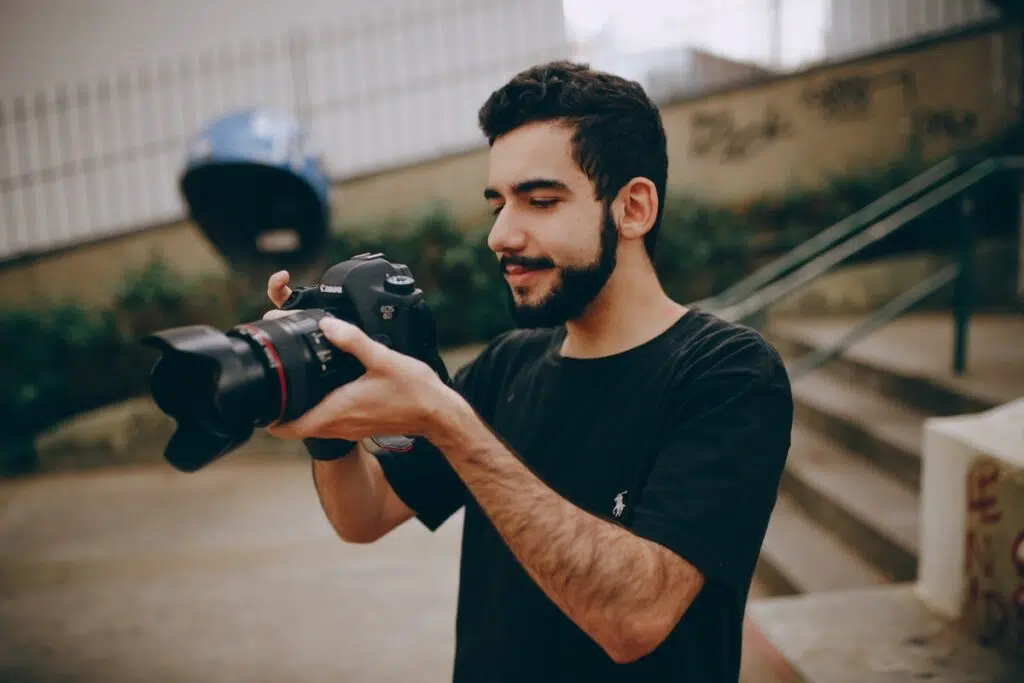
But don’t forget, it might not be quite as easy as you think!
If you do use the right resources though, you’ll be able to avoid a multitude of mistakes that will give the game away that you might not be as experienced as you would like to think!
If you want to avoid some of the pitfalls that are most commonly made by beginners, take a look at the 5 most common mistakes beginner photographers make and how to avoid them below:
Blurred lines
No matter what you might see on films of the TV, there is no such magical software that allows you to sharpen up images in post-production easily.
You can’t just click and expect all that sharpness to appear if it was not there in the original image, so it is absolutely critical that you ensure there is no blurriness from the outset.
Obviously, this is easier said than done, and the way to do it is to reduce the movement of the subject and of the camera itself.
Trying different stances to bring as much rigidity to the hold of your camera will help – you need to stabilise it as much as you possibly can.
Plant your feet shoulder-width apart to make your body as sturdy as possible, hold the camera with both hands and bring your elbows in towards your chest.
You can also try sitting on the floor and resting your elbows on your knees.
A tripod can be an incredible tool but isn’t always practical depending on the circumstances in which you need to take pictures.
Your shutter speed might also be the culprit – it might be too slow to freeze the movement of what you are photographing.
Try different settings of it to see what works best in the environment you are in.
Wonky view
The horizon of the photo you are taking needs to be straight, or you will damage the whole look of the picture.
Nothing is more likely to make you look like an amateur than a crooked photograph, so it is one to be avoided at all times!
Fortunately, this is comparatively easy to do.
There are various pieces of tech which can help you – your tripod might have a level built into it so you can level it up before you snap.
You can also buy an external bubble level to mount on to your kit, which will mean you can get it straight.
Take a look at your camera and see if that has a built-in grid you can use too – the grid lines will soon show you if your horizon is wonky.
And if all else fails, there is always Photoshop to level it up after the pic is taken!
Awkward and unnatural poses
If you’re a beginner, the chances are you might not be working with professional models, and if you are not careful, this will show in their stances!
If you have a distinct pose in mind, try not to force it too much.
Allow them to adapt and get comfortable in the position, which will be made far more manageable if you put them at ease with a bit of humour, chit chat and eye contact.
Trying out new kit in an important shoot
Whether it is a paid shoot or just something that is important for other reasons (such as a friend’s wedding), it is wise to stick to what you know, tech-wise.
When you have just purchased a new piece of equipment, it can be so tempting to use it as soon as possible.
But fight this feeling because an important session is not the time to start learning and testing your new stuff.
You cannot know how your pictures will turn out if you have not already used this kit so you could end up with results you really are not happy with.
Do your shoot a favour and make sure you only use items that you know will give you great photos!
Spatial awareness fails
A photographer likely has a passion for taking pics of beautiful scenery or subjects, so it’s extremely easy to get carried away and get snap happy at the first sign of something vaguely interesting.
However, it will often give you a much better finished product if you sit back and take a moment to think about the scene in full.
Yes, the subject might want to be the key focus, but the perspective might be off if you do not adjust it appropriately.
You might even need to take just a few steps to the left or right, and the whole image might look much better.
Make sure you don’t chop off parts of what you are looking at and try to consider things that might spoil it in the background.
There are, of course, other mistakes that are easily made such as over-editing the pictures to try to make them look ‘perfect’, so keep talking to other photographers and keep learning wherever you can.
Soon, your pictures will all look professional standard!